Emergency Contact: +91 910 002 2202

Polytrauma Rehabilitation in Banjara Hills
Polytrauma Rehabilitation in Banjara Hills
20-11-2026Complete Guide to Polytrauma Rehabilitation at Banjara Hills
Sustaining multiple injuries in an accident can be physically and mentally draining for the victim and their family. Multiple injuries affect multiple systems of the body. Along with traditional medicine, a complete recovery may involve intensive physiotherapy, neurological rehabilitation, occupational therapy, psychological support and round the clock medical supervision. Finding the right Polytrauma Rehabilitation Center in Banjara Hills enables the patients to get the much needed structured rehabilitation.
Polytrauma affects a person’s ability to walk and talk and affects a person’s independence. The injuries can include fractures, spinal injuries, brain injuries, nerve injuries, and injuries involving multiple body systems. Each injury needs individual attention and the rehabilitation process needs to address other conditions and how they affect each other. Professional guidance helps the patient to improve their strength and mobility and regain independence.
Banjara Hills has a number of facilities that provide rehabilitation services. A good rehabilitation center needs to address the needs of the family members as well. This guide describes polytrauma rehabilitation, different therapies, other services offered by the center and consideration while choosing a rehabilitation center.
What Is Polytrauma and How Does It Affect the Human Body?
When a person suffers several major injuries in different regions of the body, this is called polytrauma. Polytrauma can occur from traumatic events such as severe motor vehicle collisions, serious workplace incidents, and significant falls. Traditional medicine focuses on the healing of single organ injuries. Polytrauma, however, causes multiple physical and functional challenges. In a motor vehicle collision, for example, the victim may sustain a fractured leg, a closed head injury and achest wall/rib fracture. In treating each of these injuries individually, the challenges that a patient faces in his/her everyday life may not be fully addressed.
Challenges faced by a patient of polytrauma may include difficulties in standing and walking due to fractures, and muscle weakness, etc. Consequences of brain injury may include problems with memory, speech, coordination, balance and concentration. Prolonged stay in the hospital due to fractures and other injuries, in addition to lack of adequate physical activity, may cause loss of joint flexibility and muscle wasting. Loss of confidence may worsen emotional challenges and affect an individual's determination in returning to his/her earlier activities. Polytrauma challenges may vary and depend on the type and severity of injuries.
Rehabilitation focuses on improving the patient's function, including all the challenges associated with polytrauma. Rehabilitation teams work to stabilize the patient and, as per his/her condition, refers for therapy. The team addresses the functional challenges including physical, neurological, cognitive and emotional problems. Among the challenges, weakness and loss of muscle mass are common, including a loss of joint flexibility. Professional help is needed to improve all the challenges.
Recognizing Patterns of Polytrauma
Polytrauma refers to the condition that occurs when a person suffers multiple injuries in a single event. Road traffic injuries are some of the most recognized causes of polytrauma. High impact collisions involving motor vehicles, motorcycles or other road users may cause simultaneous injuries to multiple body parts. The type and severity of injuries sustained by the patients vary depending on the circumstance. Some patients may sustain fractures, soft tissue injuries, traumatic brain injuries, spinal injuries or even internal injuries. Use of heavy and dangerous machinery in construction and industries may also lead to polytrauma.
Falls from great heights may also cause polytrauma if the impact is transmitted to the head, spine or the lower limbs. Traumatic injuries may also occur in sports and other recreational activities. Some patients may require multiple surgeries, extended stays in Intensive Care Units and long-term hospitalization before they may be stabilized and started on a rehabilitation program.
Knowledge about the cause and nature of injuries is important to health care practitioners since it enables the identification of potential complications that may be associated with the injuries. Depending on the injuries, the needs and types of rehabilitation may also vary. Some patients may require rehabilitation to regain the use of their lower limbs while others may need rehabilitation for the use of their hand. The type and duration of rehabilitation programs should be determined by the specific needs of each patient.
Physical and Emotional Challenges Following Polytrauma
There are many consequences of polytrauma that continue long after the patient’s discharge from the hospital. Various limitations can result in loss of independence. It can be very difficult for a patient to maintain balance, walk, climb stairs, and lift objects, and a patient may even experience discomfort when sitting. Fatigue can make daily activities very draining, and stiffness and pain in the joints can also reduce the endurance and coordination of the patient. As a result, the patient may rely on mobility aids and caregivers for some time.
The challenges resulting from the trauma can lead to emotional difficulties for the patient and family member. The patient may experience anxiety, fear, and frustration and lose faith in the future. The patient may also feel humiliated as a result of the loss of physical independence. A change in a patient’s appearance, employment, social participation and mobility can also negatively affect a patient’s confidence. Family members may also become emotionally exhausted as a result of taking care of the patient.
To alleviate the feelings of exhaustion and frustration of the patient and family member, it is important to create a plan that will stimulate the patient’s physical, emotional, and social wellbeing and improve communication, participation, and goal attainment. The patient should also be rewarded for achieving small steps towards independence, whether it be performing a certain task, communicating in a more effective way, or standing without assistance.
Why Is Polytrauma Rehabilitation Important?
The focus of the majority of medical interventions is on the management of complications or acute concerns and the maintenance of the stability of the injured patient. Rehabilitation focuses on the recovery of the patient’s functional abilities. Medical and rehabilitation interventions are not mutually exclusive but have different foci. Most patients undergo a surgical and/or medical intervention to stabilize their condition and/or to manage the complications of the injury. However, they can have challenges with walking, using their hands, communicating and performing other activities of daily living. It is through rehabilitation that these challenges are managed via planned interventions and/or treatments.
Various rehabilitation interventions are based on the assessment of the functional abilities of the patient. These abilities can include, but not limited to, movement, balance, coordination, muscle strength, cognitive ability, and communication. Assessments also consider the patient’s medical and surgical history, the medications they are taking, their other medical conditions, and the goals they have for their personal recovery. Based on the assessments, a rehabilitation plan is developed and implemented. This plan is reviewed and/or amended as the patient’s condition changes and/or the goals are attained.
Due to the nature of polytrauma, the injuries a patient can have are multiple and wide-ranging, and so the rehabilitation requirements can also be wide-ranging and multiple. The National Institute for Health and Care Excellence (NICE) advises a personalized, multidisciplinary approach for rehabilitation for patients who have suffered a traumatic injury. It emphasizes the importance of psychological and cognitive functioning and the need to include relevant specialists in the rehabilitation process.
Also, professional rehabilitation provides patients and caregivers a better sense of what to expect as they work towards goal directed recovery. Traditionally, outpatient rehabilitation programs incorporate supervised therapy and functional training, education and regular assessments. Although every individual recovers at a different pace, consistent and adequate supervised rehabilitation can help achieve functional goals.
Early Rehabilitation Planning
Early rehabilitation planning means the rehabilitation of the patient is integrated into the overall treatment plan of the patient. This means that intensive exercises do not need to be initiated for every patient as soon as they sustain their injuries. Some patients may require surgery or medical stabilization, and/or may need to be placed on various precautions before movement and therapeutic interventions can be initiated. It is the responsibility of the treating medical team to determine the right time to initiate therapeutic interventions, and to decide which activities and movements should be restricted.
Once the patient is medically stable, rehabilitation professionals can implement interventions to maintain joint range of motion and muscle function, as well as to ameliorate the effect of inactivity. As the condition of the patient improves, activities can include sitting, standing and balance training, and eventually walking. The activities are decided based on the condition of the patient, and the restrictions placed by the surgical interventions, pain and the overall functional capacity of the patient.
Initiating the process early allows families to understand the patient's requirements of rehabilitation, plan for referrals and rehabilitation placements, and prepare the home environment. The NICE guidance suggests that an assessment of the need for rehabilitation should occur as early as possible and that the handover between acute hospital services and rehabilitation services should be integrated.
The aim is to eliminate unwarranted breaks in the patient's care and to make sure that each stage of the patient's recovery process is medically justified.
What to Expect from a Polytrauma Rehabilitation Centre in Banjara Hills
The selection of a rehabilitation center by the family is particularly critical in the case of patients with complex injuries. An appropriate rehabilitation program should begin with an assessment of the patient's condition as opposed to the immediate prescription of a series of exercises. Patients with Polytrauma, by the nature of their condition, are variable in terms of their treatment history, limitations, and medical restrictions. Some of these patients may require full assistance to perform simple movements, while others may not require assistance to perform more complex activities of daily living. A professional Polytrauma Rehabilitation Center in Banjara Hills should understand these variabilities while planning a rehabilitation program.
The rehabilitation team should analyze the details of the patient's condition, the surgeries, diagnostic tests and the recommendations of the surgeon and other treating doctors. Based on the findings, the rehabilitation team defines areas to be addressed and sets goals for improvement.
As part of the rehabilitation programme, the patient and family should be communicated to on a routine basis. Awareness of the rationale behind the recommendation of a particular rehabilitation measure eases the patient and caregiver participation in the program. Progress should be monitored and the program should be modified as per the patient's response. The most advantageous rehabilitation program is that which combines clinical supervision, participative patient role, attainable and definable goals, and family education.
Personalised Rehabilitation Assessment
A personalised rehabilitation assessment is the basis of an effective rehabilitation program. Each polytrauma patient has a unique combination of injuries, and therefore, the same treatment and rehabilitation exercises may not apply to everyone. What may be appropriate mobility training for a patient who had a lower limb fracture may not be appropriate for a patient who had a spinal cord injury. Same is the case for a patient with a head injury; training for mobility, positioning and transfers may be appropriate as well as assessments of memory, attention, communication, and behaviors.
Rehabilitation professionals evaluate many different things during an assessment, such as muscle strength, joint movement, flexibility, posture, balance, walking ability, and coordination. They may assess endurance and functional capacity. This includes the patient’s ability to perform activities of daily living, such as dressing and bathing, as well as transfers between bed and chair. The rehabilitation team also assesses the patient's speech, cognition, emotional status, and other higher functions. Respiratory assessment is performed if the patient is receiving mechanical ventilation or has respiratory failure.
The rehabilitation team establishes short-term and long-term goals based on the assessment. Short-term goals may include performing a transfer without assistance, improving joint movement, or balancing on the sit. Long-term goals may include walking and returning to prior levels of function and activity, like work and family/social outings. These goals may change as recovery progresses or other challenges present themselves.
Multidisciplinary Medical Support
Polytrauma patients usually require combined efforts of different healthcare professionals. While a physiotherapist addresses the patient’s mobility and physical strength, an occupational therapist works on the patient’s activities of daily living. Speech-language therapists work on communication and swallowing difficulties. The patient may need the input of other professionals based on the injuries sustained, for example a neurologist, orthopaedic surgeon, rehabilitation physician, psychologist, nurse, dietitian and others.
A multidisciplinary approach helps work on different aspects of a patient’s recovery at the same time. For example, a patient who has a brain injury and a fractured leg may need mobility training and neurological rehabilitation at the same time. If the patient is also having difficulty swallowing, he may also need a speech and swallowing assessment.
The Ministry of Health and Family Welfare, India’s Standard Treatment Guidelines for the Management of Trauma 2025 outlines the importance of timely and effective trauma management.
Planning for rehabilitation of a patient should begin right after a polytrauma patient has received emergency and surgical interventions. Families of polytrauma patients should inquire about the specialists that will be available to the patient during their stay at the rehabilitation center. They should also find out how different professionals will work together to plan for and address the patient’s needs and how the patient’s progress will be monitored.
Polytrauma Patients and Related Therapies
Rehabilitation following multiple injuries involves more than just one therapy. Which body part of the patient is involved, and to what level of functional difficulty, determines the kind of therapy required. The focus of a good rehabilitation program is to strengthen the patient’s movement, coordination, communication, and general wellness to enhance functional independence. Choosing rehabilitation interventions depends on an objective and subjective assessment of the patient’s condition, and consideration must be given to the constraints of the patient’s medical condition.
A patient with multiple fractures may need weight-bearing training and physical therapy to increase the strength and coordination of the lower extremities, if cleared by the orthopedic team. Cognitive and behavioral changes following a traumatic brain injury require the intervention of a rehabilitation team to build a patient’s communication, memory, attention, and self-care skills. A patient with a spinal cord injury may benefit from the training of alternative means of mobility and positioning to increase functional independence in activities of daily living. A patient with speech and/or swallowing problems may benefit from communication therapy.
Families who are searching for a Polytrauma Rehabilitation Centre in Banjara Hills should note the availability of a range of specialised therapies is more important than just the availability of a physical therapy unit. The following services are relevant to polytrauma recovery, although not all patients will require all of these services.
Mobility training and physical therapy
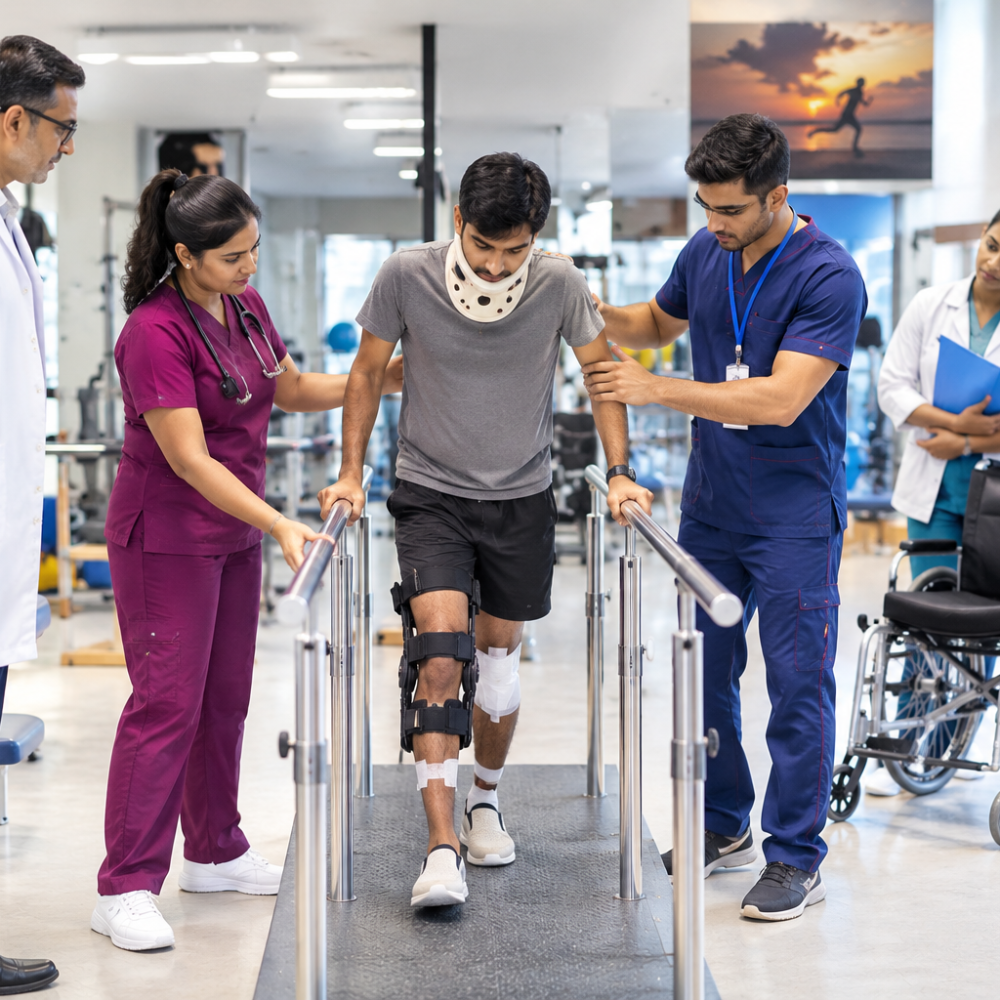
Depending on the condition of the patient, the program can include gentle joint movements, stretching exercises, strengthening exercises and activities to improve posture and mobility, balance and practice of functional movements. Patients may progress to sitting, standing, and walking if they are cleared medically. Some patients need use of walking aids, parallel bars or other mobility aids while they recover. The therapist manipulates the intensity of the activities, based on the recommendations of other professionals involved in the patient's care.
The goal of physiotherapy is to help a patient gain enough control of the body to make safe and functional movements. It is not enough to increase the strength of the muscles of the legs for example, for a person to be able to walk. Other abilities such as balance and coordination also need to be addressed. In some cases, where the patient is not able to clear the secretions from the lungs or where other medical reasons, like a chest injury, hinder movement and create respiratory problems, respiratory physiotherapy may be needed.
The overall aim of the rehabilitation is to help the patient gain the ability to function as independently and as safely as possible in his or her environment. Improving small things like doing some activities while seated, or standing with assistance, or taking a few steps, can build the person's confidence and self-reliance.
Occupational therapy aims at training patients to perform daily activities of living, which may have become difficult due to brain injury or other polytrauma. Limitations in upper and/or lower extremities can make the performance of many daily living activities difficult. Occupational Therapy assesses and addresses such limitations.
Therapy includes practicing movements, strengthening the grip, and improving coordination to aid in performing self-care activities and tasks. Patients learn how to perform more effectively the transfers between different surfaces and how to use assistive devices. It teaches a patient ways to organize the environment in order to reduce the need for excessive physical effort. If the patient is not able to perform a task the usual way, the therapist may give an alternative way of performing it or use an assistive device.
For example, an individual who has impairment of hand movements may learn how to use special eating utensils. Another individual may need how to arrange the bathroom in a way that he or she can perform tasks such as a bath with less assistance. The use of equipment to perform daily living tasks may make a person less dependent on the caregiver.
Occupational therapy looks at the long term goals of an individual as well. These goals may include returning to work or school, and household chores. Other may have the goal of becoming independent for self-care first. The focus and speed of the therapy progresses according to the ability of the individual. This allows occupational therapy to be part of the comprehensive rehabilitation of a polytrauma patient.
Neurological Rehabilitation
Polytrauma affecting the brain, spinal cord and peripheral nerves requires neurological rehabilitation. Injury to the brain and spinal cord can result in paralysis, dysfunction of the bladder and bowel, alteration in sensation, balance and coordination as well as changes in higher cognitive functions like memory and attention. Polytrauma can also result in a patient being unable to control voluntary movements and demonstrate weakness of one side of their body.
A patient's specific difficulties after neurological assessment determine what is included in the patient's rehabilitation programme. Activities included in the programme focus on physical movement and functional activity. Cognitive rehabilitation may be included in a patient's programme to enhance memory, attention and other aspects of higher cognitive functions.
Neurological functions may not return completely, however, during treatment, a patient may experience return of function in an area that previously had no improvement. For some patients, the ability to perform simple tasks such as picking up a glass may indicate that movement in their hands has returned, while they may still be completely unable to walk. Neurological rehabilitation professionals monitor and adjust treatment plans based on the patient's progress.
There are various factors that influence a patient's outcome following neurological injury and rehabilitation. In some cases, there is return of function, improved movement and increased participation in life activities, despite the injury being severe. This is the desired outcome, however, often the outcome is improved quality of life, where rehabilitation has taught the patient to be safer in functional activities of daily life.
Speech and Cognitive Rehabilitation
Some patients with polytrauma (trauma with multiple wound sites on the body) present communication and swallowing challenges, including memory and thinking skills, if there is a TBI or other neurological complication. Some of these challenges affect a person’s ability to express their needs, understand directions, remember information, and participate in a conversation. Speech and cognitive challenges are rehabilitable through evaluation and therapy.
A speech-language pathologist may conduct a professional assessment and conclude the reason for difficulty communicating is due to an impairment of speech, language, and/or swallowing. Treatment would vary for each and may consist of structured or organized activities that foster communication. For swallowing impairments, the therapist, in conjunction with the medical team, may implement a plan of action that includes a swallowing assessment for safety.
Cognitive rehabilitation focuses on attention, memory, organization, and planning. For memory challenges, repetition may be incorporated for the patient to remember information for a shorter time. To enhance concentration, repetitive and structured activities may be incorporated to reinforce the principle of focusing, maintaining attention and understanding. Family members are urged to assist by removing distractions and following recommendations and instruction. The goal of incorporating speech and cognitive rehabilitation services is to allow the patient to enhance communication, memory, and thinking challenges. Combined with other rehabilitation services, the goal is to address the challenges of living functionally as a result of polytrauma.
Importance of Psychological Support During Recovery
Emotional problems following a serious accident usually persist after the physical injuries have healed. Patients worry about their health, feel anxious and frustrated because of their dependence on others, and are preoccupied about their return to previous lifestyle. They may develop depression, anxiety and adjustment disorders. Some may have problems like insomnia, fear of travelling, and other psychological problems, which affect their collaboration and participation in the rehabilitation process.
The goal of psychological intervention is to ensure the patient understands the emotional challenges, and learns to manage them, in the process of recovery. This may involve counselling, teaching coping skills, and/or emotional support, and when necessary, psychological referral. Cognitive and behavioral changes due to traumatic brain injury may require more specialized psychological and neuropsychological assessment and interventions.
The caregivers also need psychological support. Caring for a person with complex injuries is draining both emotionally and financially, and may entail additional responsibilities. Education and counselling can support caregivers to set realistic expectations, practice healthy caregiving, and deal emotionally with the situation.
Positive recognition and encouragement for small steps can help patients maintain hope and address their concerns without feeling judged. Acknowledge that not all progress is linear and note that temporary setbacks do not always reflect that a recovery program has failed. Focusing on emotional healing along with the physical recovery helps maintain hope, and positive engagement with rehabilitation goals.
Advanced Rehabilitation Techniques and Recovery Planning
Improvements in rehabilitation techniques include ways to enhance movement and participation in various activities and promote improvements in functional capabilities of patients. Selection of the most appropriate rehabilitation techniques for a polytrauma patient depends on the type and the severity of his/ her injuries, his/ her medical stability and physical potential, and the goals of rehabilitation. While some patients only require conventional physiotherapy and supervised functional activities, others may require specialized neurological rehabilitation, and/ or the use of assistive technologies and other assistive/ rehabilitation devices.
A rehabilitation center should provide detailed information about the rationale and the basis for each recommended intervention to the patient and/or family member, and describe how it is beneficial to the patient’s recovery plan. For example, repetitive task training may be used to teach a patient to perform a functional task or a movement, while balance training may be used to help a patient who feels unstable while standing. Assistive devices may be used to improve a patient’s ability to perform activities of daily living that he/ she is unable to perform independently. The use of such devices should be based on the results of clinical assessments of the patient rather than the availability of specialized equipment in a rehabilitation center.
Routine assessments of patient’s progress and recovery should be integrated in the plan. Barriers to patient’s progress in recovery may be due to impairments in physical functions, alterations in mental status, and environmental factors.
Nutrition and General Health During Rehabilitation
For some patients, rehabilitation after a major surgery, injury, or a long hospital stay is not complete without adequate nutrition. At this stage, the body requires sufficient energy and nutrients for normal body functions, healing, and activity. The nutritional needs of an individual may also vary with their age, health condition, ability to swallow, existing illnesses, dietary restrictions, if any, and many other factors.
After hospital stay, there may be a loss of appetite for some patients, while for others there may be swallowing difficulties. There are many conditions that require change in dietary pattern. A dietitian can review the condition and status of the patient and provide dietary plans and recommendations, in consultation with the doctor/s responsible for the case. High protein diets, supplements, or restrictive food programs should not be initiated without professional advice, especially when there are existing conditions.
The general health of a patient includes adequate hydration, sleep, and proper management of medications. The patient may need repeated medical reviews to address changes and complications in their condition and to change their treatment. The general health and medical conditions of the patient should always be taken into consideration while planning and organizing rehabilitation activities, to avoid stress and discomfort to the patient. Patients should be confident that the health and rehabilitation activities are integrated and not in competition with one another.
When a center incorporates these additional considerations into its activities and service provision, families are reassured that comprehensive, patient-centered services are being provided. The intent is to ensure that the available service activities to support the patient remain appropriate to the patient’s medical condition.
How to Choose the Right Polytrauma Rehabilitation Centre in Banjara Hills
There are multiple things to consider when choosing a rehabilitation centre for a polytrauma patient as they can have multiple and changing healthcare needs. Families should look for a centre that has post-traumatic recovery and provides rehabilitation according to the patient’s injuries. A centre’s general reputation is important, however other things such as the services provided, specialists available, clinical supervision, and their ability to manage the case and coordinate the care should be equally important to the family when considering a centre.
The family first needs to consider the patient’s requirements and expectations. Do they require orthopaedic rehabilitation, neurological rehabilitation, training to relearn activities of daily living (ADL), speech therapy, mobility training, etc? Do they require inpatient rehabilitation or can they manage with outpatient rehabilitation? It is important for the family to have these discussions with the medical team who is treating the patient to better understand all the options available for the patient.
Families should find out if the rehabilitation center considers previous medical reports, especially if the patient had surgery or has restrictions like weight-bearing, movement of the spine or other restrictions. Rehabilitation should be in line with the medical precautions taken.
Things to consider when assessing a Polytrauma Rehabilitation Center in Banjara Hills:
- Staff members: Examine the qualifications and experience of the rehabilitation physicians, physiotherapists, occupational therapists and other related professionals.
- Facility: Determine if they are able to provide the therapies needed for different traumatic injuries.
- Treatment Plan: Ascertain if there is an individualized treatment plan with goals for the patient and if there is active medical supervision for the patient.
- Progress: Determine how often the patient’s ability to perform different functions is assessed and goals for recovery are evaluated.
- Caregiver Training: Ask if caregivers are taught how to help the patient move safely and how to perform different activities of daily living.
- Services: Determine if there are appropriate health, safety and hygiene standards.
- Discharge Planning: Ascertain if the center helps the patient prepare for additional rehabilitation and activities needed for daily living.
Conclusion
Polytrauma is a condition that occurs when a person suffers multiple serious injuries. These injuries impact a person’s physical mobility and also their emotional and psychological wellbeing. Additionally, Polytrauma impacts a person’s ability to perform basic, day to day activities independently. Families that are seeking the best Polytrauma Rehabilitation Center in Banjara Hills are advised to consider the range of therapies available, the professionals, and the rehabilitation and other medical facilities, as well as family support services provided by the center.
ASA Healthcare in Banjara Hills, Hyderabad has excellent rehabilitation facilities, and offers a range of therapies and supportive treatments to improve the physical mobility of its patients. The rehabilitation team strives to understand each patient’s specific requirements and forms a customized treatment plan to achieve the patient’s goals for recovery. The use of advanced medical equipment, therapeutic aids, as well as the supervision of experts helps patients improve their physical and mental strength and also gain confidence. Involving the family in the rehabilitation process supports the patient achieve recovery goals and also enhances the quality of their life.
FAQs
-
What is a polytrauma rehabilitation centre?
A centre specialized in the care of patients with multiple injuries.
-
Who needs polytrauma rehabilitation?
Patients with fractures, spinal and/or brain injuries.
-
What treatments are available for polytrauma patients?
Physiotherapy, occupational therapy, mobility training, neurological rehabilitation, etc.
-
How long is polytrauma rehabilitation?
It depends on the severity of the injuries and the patient's progress.
-
How can I find a Polytrauma Rehabilitation Centre in Banjara Hills?
Contact ASA Healthcare, Banjara Hills, Hyderabad for more information.