Emergency Contact: +91 910 002 2202

Long-Term Ventilator Care in Banjara Hills: Everything You Need to Know About Advanced Respiratory Recovery
Long-Term Ventilator Care in Banjara Hills: Everything You Need to Know About Advanced Respiratory Recovery
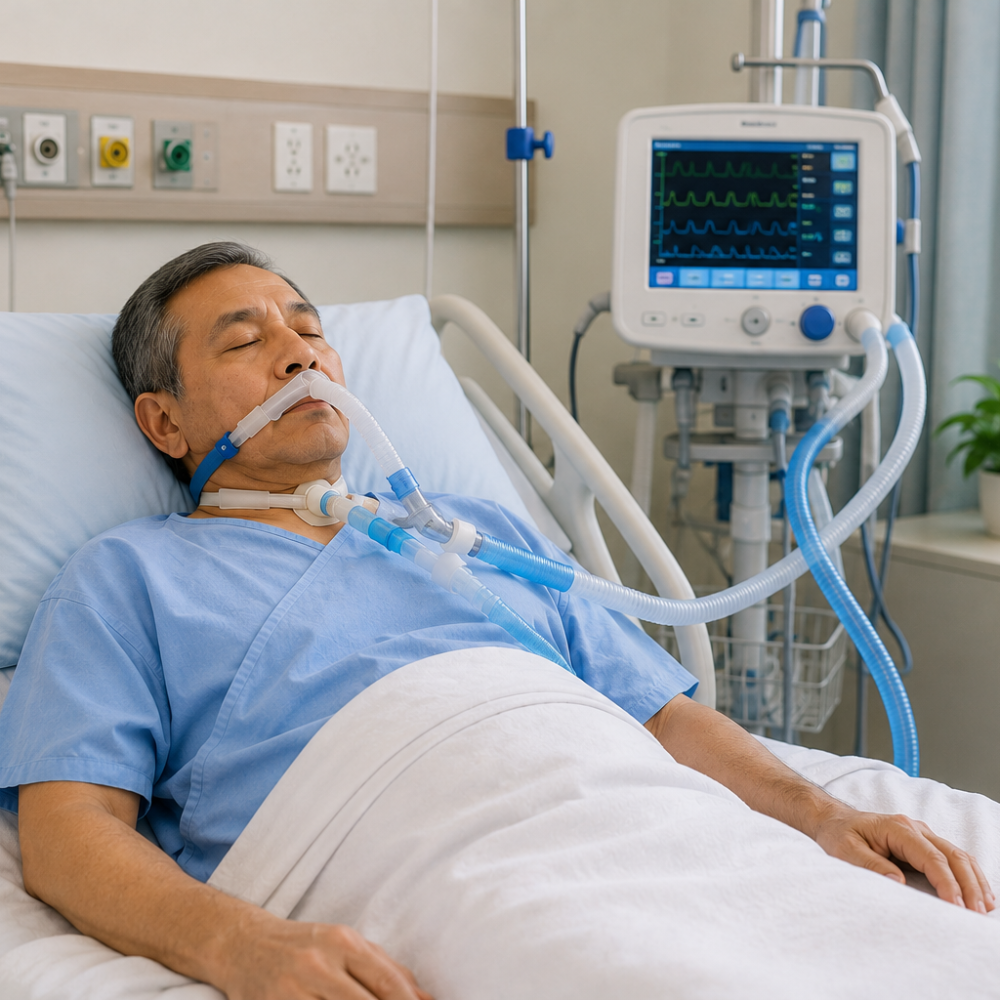
07-05-2026Searching for long term ventilator care in Banjara Hills is a top consideration for many families during very difficult times in life. Ventilator support is necessary for many reasons including stroke recovery, other forms of serious lung infection, neurologic disease, trauma, or extended stays in ICU. Banjara Hills located in Hyderabad, India is one of the top destinations to find advanced long-term support for ICU care, rehabilitation, home care for ventilator support and advanced respiratory care. Modern healing and rehabilitation centers provide care plans to meet the patients need and combine a variety of disciplines, including medicine and respiratory therapy along with physiotherapy, and nutrition with emotional support to their patients.
Advancements in rehabilitation, critical care and long-term ICU systems to aid ventilator support is being driven by a high demand in the healthcare systems of Banjara Hills. Recently, hyper-specialized centers for the care of critically ill patients in Hyderabad are focusing on 24/7 advanced, invasive ventilatory support, rehabilitation care, and home care. With the introduction of improved ventilatory care systems, families are not just seeking ways to ensure patient survival, but also ways to achieve patient comfort, quality of life, and use structured recovery programs.
Long-Term Ventilator Care
Long-term ventilator support delivers continuous mechanical assistance for lung function which allows the patient’s body to gain and expel oxygen and carbon dioxide. Patients of long-term ventilator support cannot regain spontaneous breathing for months or years. This service falls under the category of long-term care. This service has to be integrated with other medical services as lung function is critical to multiple systems.
Over the last decade, the industry has rapidly advanced. Prolonged ventilator support traditionally meant that the patient was relegated to the intensive care unit for years. This is no longer the singular option, particularly in Banjara Hills. In the past decade, integrated long-term care that incorporates continued ICU care, respiratory care, physiotherapy, rehabilitation, and beyond has gradually become the norm over the rehabilitative care and general maintenance of life. Rehabilitation and other support have significantly increased patient comfort and survival rates. Independence has become the norm over support.
Families need to know ventilator care does not have to be life-long. Pulmonary rehabilitation and structured rehabilitation can help the lung function to the point that ventilator support can be lowered or there the ventilator support can be removed entirely. Care facilities int the advanced stages of rehab in Hyderabad are beginning to integrate speech therapy with mobility and respiratory training with long-term care.What is a ventilator and what is it used for?
A ventilator is a type of machine that moves air into and out of the human lungs in order to support or replace the natural way of breathing. The ventilator becomes a must in the case that the respiratory muscles or lungs can't function adequately. Among other procedures, severe pneumonia, spas or major surgeries that are neurological in nature typically will require the patient to be put on a ventilator. The machine in the cases of the patient, will be able to combine air that is oxygen enriched and will be able to control the pressure in the lungs, the machine will be able to control the intervals and the rate and depth of the breaths that are to be taken.
There are many misunderstandings surrounding ventilators due to their common association with emergency ICU scenarios. They are also a critical component of long-term recovery and rehabilitation. Patients often have to use different types of ventilators including surgical or airway management invasive ventilators, which often require the use of a tracheostomy tube, and non-invasive ventilators, that require the use of masks. In Banjara Hills, many technologically advanced ICU facilities have started to integrate smart ventilators which are equipped with systems to monitor real time metrics of oxygen level, lung pressure, and the ability to measure the adequacy of the breathing.
BiPAP and CPAP for Extended Support and Post Ventilator Rehabilitation
There are many medical problems that can also result in a long duration of difficulty in breathing that would require a ventilator. Several types of neurological disorders, including an attack of the breath, ALS, and muscular dystrophy and stroke can sabotage the respiratory system. Chronic lung conditions, that trickle down the lung function, include COPD and severe pulmonary fibrosis. Traumatic conditions that have a significant impact on the brain and spinal cord can also severely affect the ability to breath.
Another growing and significant category of this population are the post ICU recovery patients. Meeting the requirements for long-term ventilatory support in the context of rehabilitation is post ICU recovery patients from serious injuries, such as an infection or a serious surgical event, like cardioplegia. In the context of the Banjara Hills hospitals, one can observe an increase in the development of this population.
Why Banjara Hills Is a Preferred Healthcare Destination
Due to the advanced facilities in hospitals and rehabilitation centers, as well as the notable professional workforce, Banjara Hills is one of Hyderabad's biggest Healthcare Hubs. Parents and residents in Hyderabad and in the neighbouring regions come to Banjara Hills to access highly specialized critical care, because of the wide array of critical care specialized teams like pulmonologists, critical care specialists, physiotherapists, and practices in the management of advanced ventilator dependent problems.
The Healthcare facilities in Banjara Hills and the region have invested a lot of financial resources on highly specialized critical healthcare. As a result, a lot of the hospitals provide not just advanced ICU, ventilator, and ECMO services, but also long term and sub-acute care. Recently, the CARE Banjara Hills multi-specialty hospital has shown the important benefits of Mobile ECMO, which provides the benefits of an internal hospital to the external community, and the critical care services from specialized personnel. It is also the leading demonstration of an increasing need to provide safe and progressive healthcare services to those in critical care.
Critical Care Services
Modern ventilator dependent care and Advanced Critical Care service is essentially reliant on the physical resources of a hospital. Banjara Hills has a lot of hospitals that are equipped with all the resources in critical care services to support the management of rehabilitative and respiratory dependent care and also provide long term acute care services.
The infrastructure also counts, because patients on the ventilator dependent rehabilitative care need to be constantly monitored and need to have their status to be quickly altered. to ensure the management of any major and minor eventualities. the various features of Advanced Care services provide the patients with care environments that ensure the patients are catered to various needs of concern thus the advanced of the infrastructure the lower the infective rates thus the quicker the recovery of the patients and eventual weaning from the ventilator.
Drafting care plans for ventilator patients necessitates the integration of multiple disciplines and specialties, including the intensivist, pulmonologist, respiratory therapist, nurse, dietician, physical therapist, and speech therapist. Because of the many hospitals and rehabilitation centers with integrated treatment centers, Banjara Hills has established itself as a multidisciplinary care hub.
Think of an orchestra or a band—everybody is playing a different instrument, and those instruments have to remain perfectly coordinated and in synch, otherwise the music doesn’t sound good. Ventilator care is no different. Likewise, the components of the care plan also work in tandem with an end goal of maintaining the patient’s quality of life, and faster recovery.
Types of Long-Term Ventilator Care Available
Long-term ventilator care is no longer limited to hospital ICUs. Patients and families now have multiple care options depending on medical complexity, financial considerations, and recovery goals. In Banjara Hills, healthcare providers offer both hospital-based and home-based ventilator programs designed to accommodate different patient needs.
| Care Type | Best For | Key Benefits |
|---|---|---|
| Hospital-Based ICU Care | Critically unstable patients | Continuous monitoring and emergency intervention |
| Rehabilitation Center Care | Recovery-focused patients | Therapy integration and mobility training |
| Home Ventilator Care | Stable long-term patients | Comfort, family support, reduced costs |
Critically ill patients requiring constant level supervision tend to be provided with data-supported hospital-based adult ventilator care. Advanced levels of emergency ventilator treatments and continuous physical and emotional rehabilitation may be provided to adult patients with intubated emergency and critical conditions. Central long-term adult acute care facilities (LTAC) in Hyderabad have commercialized services for patients with acute care requirements who are supported with emergency dialysis and advanced wound care management, in addition to being sustained with adult crisis-based mechanical ventilation.
In these adult acute care facilities, patients also enjoy benefit from advanced clinical adult respiratory emergency and crisis care. The medically critical nature and risk condition of crisis ventilation threaten survival of emergency patients.
Home-based ventilator care services can also be utilized to improve emotional recovery of various adult patients with crisis and comorbid conditions who can be discharged to their homes from various ventilatory healthcare enterprises. The crisis of emotional worry of family and relatives can also be big. In addition, adult families can also save from the big costs of shelter for their loved ones. However, adult families also incur big costs in replacement adult care, adult replacement power systems, adult replacements, replacement adult care, and adult care with big complex infection replacing adult care systems.
Financially, home care can also be easier to do. As per current estimates, providing ventilator home care services in Hyderabad can be between INR 1,500 and INR 3,500 per day, based on the intensity of care. While the costs of home care experiences may be higher, as they may include the caregiver and the equipment, many families believe home care to be more affordable and sustainable than prolonged ICU hospitalization.
Services of the Home Ventilator Care (H50
The provision of quality ventilator care goes far beyond the simple operation of a breathing machine. There is a high degree of medical management and care to sustain good health and avoid complications and improve recovery. This has resulted in some of the premier hospitals in Banjara Hills to offer a spectrum of services in their long-term respiratory care programs.
Breathing Support and Surveillance
The management of ventilation care is the most important component of the care provided. Respiratory therapists help with taking care of the oxygen levels and other settings on the ventilator, and the removal of airway secretions and could do a number of breathing retraining exercises on the patients. Maintaining surveillance of patients on ventilatory support care are important for the early warning of the signs of infection so that lungs do not collapse and patients do not go into respiratory distress.
The best facilities use sophisticated technology that encompasses monitoring and surveillance to safe patients improve and electronic and computer assisted medical devices to maintain patients and help in the recovery and rehabilitation of the patients.
Recovery Support
Recovery may be difficult without support in the form of adequate nutrition. Recuperation also fails without that support. Weak breathing muscles and other muscles as well, improve with protein. Diet meals and manage the clinical and nutritional to optimize health for patients to improve recovery.
Rehabilitation Therapies are of equal importance. Long periods of dependency on a ventilator leads to the atrophy of a majority of the skeletal muscle mass of patients as a result of continuous immobility. Physiotherapy, occupational therapy, speech therapy, and mobility training are essential to strengthen patients and help them gain a sense of confidence. There are even some rehabilitation centers in Hyderabad that use a combination of robotic therapy systems and hydrotherapy pools for therapy.
Use of Modern Technology in Ventilator Care
Rapid advances in technology have impacted almost all aspects of respiratory care. There is a wide range of variety in modern ventilation service-related technologies, providing a capability for a nearly unlimited range of possibilities. Modern ventilators are intelligent and can monitor variations in patient lung resistance in real-time and adjust otherwise...
As an example, here is a modern hospital in Banjara, Hills.
Integrated medical systems technologies combine ventilators, imagers, renal replacement machines, and cardiac monitoring and therapeutic infusion systems to provide an efficient and effective boutique critical care. Modern, multi parametrical monitoring systems provide clinicians the ability to respond in real-time to critical patient life support and therapy issues.
Modern high technology ventilators, with a higher level of intelligent LEDs providing a real-time visual, functional, and safety interface, help prevent further adversity to the patient's ongoing respiratory tract conditions. A few modern ventilation systems incorporate advanced artificial intelligence technologies that calculate and optimize ventilator settings for the patient specific lung mechanics.
ECMO and Emergency Respiratory Support
CARE Banjara Hills Hospital explain ECMO, or extracorporeal membrane oxygenation, is one of the most sophisticated systemic forms of respiratory support, which serves part of the respiratory system and the cardiac function of the lung in patients suffering from near-fatal respiratory failure. ECMO mobile services are essential for taking and supporting emergency, critical, and life - threatening patients during the extremely critical transfer phases. Support during critical transfer phases. Recently, the importance of mobile ECMO services has been traced by CARE Hospitals, Banjara Hills. The introduction of ECMO has improved the odds of survival for patients suffering from extreme and critical respiratory failure and affected the adoption of many areas of the healthcare systems of Hyderabad. It also has the services of critical care worldwide.
Cost of Long-Term Ventilator Care in Banjara Hills
The level of medical complexity, and type of the facility, all affect the cost of long-term ventilatory support. Medical establishments that offer this medically and technologically sophisticated solution in India typically provide it in Intensive Care Units, which is also the most expensive type of offer due to operational support and emergency medical aid.
Choosing the Right Ventilator Care Facility
Choosing a ventilator care facility is one of the most critical decisions a family makes, the reason being that it has an impact on the outcome of recovery and complications.
Defining Important Factors Families Consider
Families need to assess the following factors in choosing the appropriate care provider:
- Access to 24-hour intensivists and respiratory therapists
- Standards of care for infection control
- Ability to respond to emergency situations
- Availability of rehabilitation services
- Assessment of the nurse-to-patient ratio
- Quality of equipment and presence of backup systems
- Provide family counselling with emotional support
- Provide true and achievable pricing with transparency in billing
A decent place will feel like a partnership, not a hospital stays. Communication is extremely important. Families should receive the clearest, most compassionate care and realistic planning with the medical team regarding the patient's recovery.
Providing Patients with the Emotional and Psychological Support
Ventilator dependency for an extended period of time significantly impacts not only the physiology of a patient but also their mental health. Patients undergoing long-term medical treatment may become fearful, become frustrated, and experience anxiety and depressive symptoms. Extended caregiving is associated with high emotional exhaustion with added financial burden on the family.
Psychological counselling and emotional support are becoming an integrated part of the ventilator care offered in the Hyderabad ventilator services. Positive emotional support can through the facilitation of patient communication, setting rehabilitation goals that include family members, and utilizing the family contacts, music therapy, and television, and Video calls and visits greatly influence the motivation for recovery.
It is the belief of the medical service providers that a patient can fully assist getting better without the ventilator. Emotional hope is an integral part of survival.
Long-Term Ventilator Care Outlook in Hyderabad
Hyderabad has an excellent prognosis for the future of ventilator care. Telemonitoring, Artificial Intelligence (AI)-combined respiratory management, robotics rehabilitation, and more sophisticated critical care transport are being adopted by most hospitals and rehabilitation centers. The advent of the mobile ICU and ECMO programs extends lifesaving support to the greatest number of people in the most remote areas.
Home care will become more widespread. As new technology keeps becoming more portable and cost-effective, more people will receive critical care ICU-level respiratory support in the comfort of their homes. The resultant trade-off of hospital ICU stress will be significant.
Healthcare experts indicate that rather than the slow, passive management of ICU care, rehabilitation-driven respiratory care is the standard to be expected. Patients are to be fully functional, mobile, independent, and with dignity, at all times.
Summary
Banjara Hills has an impressive collection of long-term ventilator support services, the case of which combines critical care and rehabilitation. Families have entrustment to fully functional ICU, multidisciplinary specialists, ECMO, home care, and individualized rehabilitation therapies to enhance their recovery and quality of life.
The right ventilator solution depends on your and your loved one’s particular medical, emotional, and recovery needs, facility-specific capabilities, and emotional support. Banjara Hills houses a range of top-tier hospitals in Southern India with the best healthcare professionals and a modern, patient-centric care model. It is no surprise that because of this model, Banjara Hills has transformed into one of the best places of all respiratory care in India. From the perspective of both the challenges that come with respiratory care, the ample provision of ventilator care can ensure the distinction between mere survival and one of the most utmost meaningful recoveries.
FAQs
- What is long-term ventilator care?
Long-term ventilator care are the services provided when the patient cannot breathe independently for most of the day, and for the days/weeks/months of breathing recovery. - Can ventilator patients recover completely?
Many patients can be respiratory therapy, physiotherapists, rehabilitation, and good medically managed pathways. Ventilators. - Is home ventilator care safe?
Home ventilator care is safe with a good medically trained nurse/respiratory therapist/care actively to closely and safely monitor the patient. - How much does ventilator care cost in Banjara Hills?
Home ventilator care ranges INR 1,500–3,500 daily. ICU-based care is different with vegetative complex-patients. - What services are included in long-term ventilator care?
Respiratory therapy, nursing care, physiotherapy, and good medically managed nutrition, medication and rehabilitation, and emergency care are included to ventilator care.