Emergency Contact: +91 910 002 2202

Guillain-Barre Syndrome Treatment in Banjara Hills
Guillain-Barre Syndrome Treatment in Banjara Hills
20-11-2026Guillain-Barre Syndrome Treatment in Banjara Hills: Diagnosis, Care and Rehabilitation
The treatment of Guillain-Barre Syndrome (GBS) includes diagnosis, medical care and rehabilitation. GBS is a rare neurological disorder affecting the strength, movement and coordination of muscles which ultimately interferes with an individual's normal day to day activities. GBS occurs when the immune system of the body mistakenly attacks the peripheral nervous system which connects the brain and spinal cord to the rest of the body. Patients of GBS may initially experience tingling in legs with weakness which eventually leads to inability to walk and function normally. In severe cases the weakness spreads to the upper body, facial muscles and even to the muscles responsible for breathing.
Treatment and Medical Care: The initial medical care of GBS focuses on the management of the complications which occur due to the disruption of communication between the brain, spinal cord and the muscles. Disruption of communication may cause weakness of the muscles which usually requires timely medical care and management in a hospital. Rehabilitation helps to strengthen weakened muscles, improve mobility and independence and also plays a vital role in the treatment of this condition. Several individuals have successfully recovered with timely and appropriate medical supervision and rehabilitation.
Banjara Hills in Hyderabad is strategically located in proximity to various hospitals, specialists in neurology, and rehabilitation centers which aids in the recovery process. Understanding treatment options is essential for patients and their caregivers to make informed decisions regarding their treatment.
Guillain-Barre syndrome is an autoimmune neurological disorder which affects the peripheral nervous system. When the immune system of the body attacks the protective covering of the nerves or nerve fibers, the communication between the brain, spinal cord and the rest of the body is disrupted. Weakness of the muscles occur leading to difficulty in normal movements. Reflexes may be affected.
GBs can develop quickly, with symptoms sometimes appearing over the course of a few days or weeks. Symptoms can vary in severity and may result in an individual seeking medical attention, or requiring hospitalization and treatment in an intensive care unit.
Most individuals with GBS recover fully, including those experiencing the more severe symptoms of the condition. However, GBS can be life-threatening if it affects an individual’s ability to breathe normally or their autonomic nervous system. For this reason, it is essential an individual experiencing potential symptoms of GBS seeks medical attention as soon as possible and is monitored until the symptoms subside.
What Causes Guillain-Barre Syndrome?
The cause of GBS can sometimes not be identified. Usually, GBS occurs after an individual has experienced an infection, and the immune system mistakenly attacks the individual’s peripheral nerves.
Some common infections that can precede GBS include:
- Gastrointestinal infections, especially those caused by Campylobacter jejuni.
- Respiratory infections.
- Certain viral infections.
- Other infections that lead to an activation of the immune system.
GBS is not an infectious condition and cannot be “caught” by an individual.
Identifying the possible triggers of a patient’s condition can assist a doctor in further evaluating the patient and determining the patient’s medical history. However, it is not essential for a doctor to determine the possible infection in order to provide treatment for the GBS.
Common symptoms can include:
- Tingling or numbness of the hands or feet.
- Weakness of the muscles of the legs or arms.
- Fatigue.
- Symptoms can also include pain.
- The general weakness of the arms and legs.
- Difficulty standing, walking or climbing stairs.
- Decreased muscle strength and reflexes.
- Muscle or nerve related pain.
- Swallowing or speaking difficulties.
- Facial muscle weakness.
- Breathing difficulties (in severe cases).
Patients may experience changes in their heart rate, blood pressure and/or sweating because Guillain-Barre Syndrome can affect the autonomic nervous system.
Important: Increasing weakness (in the arms or legs), difficulty breathing, swallowing problems or the inability to walk should be assessed as a medical emergency. DO NOT wait for your scheduled physiotherapy appointment.
Early Diagnosis & Treatment
Recognizing the early symptoms of Guillain-Barre Syndrome is as important as seeking immediate medical attention. The condition can progress quickly and the timely involvement of the medical team can help the patient avoid further challenges and provide medical support.
Patients with sudden muscle weakness, tingling or loss of sensation or difficulty walking should seek emergency medical attention. A neurologist will assess the symptoms, perform a physical exam (to assess muscle strength and reflexes), and evaluate the patient’s case history.
Depending on the speed of symptom progression, the treatment team may decide to support and monitor the patient to alleviate the challenges the patient may be facing. One of the challenges may be weakness affecting the patient’s ability to breathe. The support team may need to place a breathing tube to help the patient. In some cases, patients may be admitted to a facility where they can be monitored and supported 24/7.
Common tests for GBS include the following:
- Nerve Conduction Studies
Nerve conduction studies measure how quickly nerves transmit electrical signals. These studies can be helpful in determining where in the peripheral nerve system function is abnormal. These tests can assist the diagnosis of GBS.
- Electromyography (EMG)
EMG studies measure the electrical activity of muscles and can assist in detecting abnormalities of the nerve.
- Lumbar Puncture
A lumbar puncture can assist the diagnosis of GBS by identifying abnormalities in the cerebrospinal fluid, such as elevated protein and/or a normal cell count.
- Blood Tests
Blood tests can assist in ruling out other conditions that can be responsible for the patient's symptoms, such as infection and/or nutritional deficiencies.
- Respiratory Function Studies
Studies to assess respiratory function are essential to determine the respiratory status of the patient. Weakness of respiratory muscles can result in loss of respiratory function.
These studies assist in making the correct diagnosis of GBS and plan the best management for the patient.
Available Guillain-Barre Syndrome Treatment Options
The treatment for Guillain-Barre syndrome focuses on controlling the abnormal immune response and supporting the vital functions of the body while preventing complications. At present, there is no known treatment to immediately repair the nerves that have been damaged. However, there are different therapies that have been established to decrease the time of recovery and improve the overall outcome of the patients.
The two main treatments that affect the immune system are the intravenous immunoglobulin and plasma exchange. The treating neurologist bases his/her decision on the patient’s condition, the suitability of the treatment and the available medical center.
Intravenous Immunoglobulin (IVIG) Treatment Intravenous immunoglobulin (IVIG) is one of the established treatments for Guillain-Barre syndrome. It is defined as the administration of antibodies through a vein to control the abnormal immune response.
IVIG modifies the immune response and reduces the harmful effects of the antibodies that cause damage to the nerves. It is generally given over a period of several days in the hospital.
The European Academy of Neurology and the Peripheral Nerve Society’s clinical practice guideline recommends that patients who cannot walk independently due to Guillain-Barre syndrome should be treated with IVIG. The guideline states that the treatment should be initiated within the first two weeks of the onset of the symptoms of the disease. The guideline also gives recommendations for treatment if it is initiated beyond the two week window.
While the treatment is being given, the patient is monitored to determine if there are any side effects of the treatment and to assess the overall clinical condition of the patient.
It is important to understand that IVIG does not replace the need for nursing care and support, nor does it replace rehabilitation and respiratory care.
Plasma Exchange Plasma exchange, also known as plasmapheresis, is another established treatment for Guillain-Barre syndrome.
First, blood is removed from the patient and put through a machine. The machine removes the plasma (which has antibodies) and returns the rest of the blood to the patient along with an equal volume of fluid.
The goal is to remove the antibodies that damage nerve tissue.
Plasma exchange is often done over the course of a few days or weeks, depending on the treatment plan. Each session requires the use of a machine and a trained healthcare professional.
Both IVIG and plasma exchange are accepted treatment options. Clinical guidelines do not suggest routinely using both treatments, back to back (plasma exchange and then IVIG), because it has not been shown to be of additional benefit.
Respiratory and Supportive Care Some patients of GBS lose the ability to breathe fully because of weakness in the muscles responsible for breathing. It can also make it difficult to cough and maintain adequate levels of oxygen in the blood.
In these cases, a patient is often given mechanical ventilation, and supportive and respiatory care is provided.
Other supportive care includes the management of blood clots, and skin care as well as repositioning. These measures are important to prevent complications from prolonged immobility.
GBS is an unpredictable condition that can affect a person's ability to breathe and other vital functions. The World Health Organization recommends patients with these symptoms be hospitalized and closely monitored.
Role of Physiotherapy in Recovery from Guillain-Barre Syndrome
Recovery from Guillain-Barre Syndrome requires the help of a neurologist and a physiotherapist. A neurologist will help taper off medication once the body’s immune reaction is controlled. A physiotherapist will help restore the patient’s physical ability and strength.
Once a treating neurologist has evaluated a patient and given stability, a physiotherapist will perform an assessment of the patient to evaluate strength, range of movement in various joints and functional limitation. Based on the assessment, a rehabilitation program will be designed to restore bodily functions and help the patient return to his/her pre- illness state of functioning.
The program should be designed to challenge the patient based on his/her strength and energy levels. This should be done under the close supervision of a trained physiotherapist, as he/she will be able to tell the difference between a good and a bad fatigue.
Patients seeking treatment in Banjara Hills have access to professionals trained in neurological rehabilitation and physiotherapy, which will help them transition from hospital care to self care.
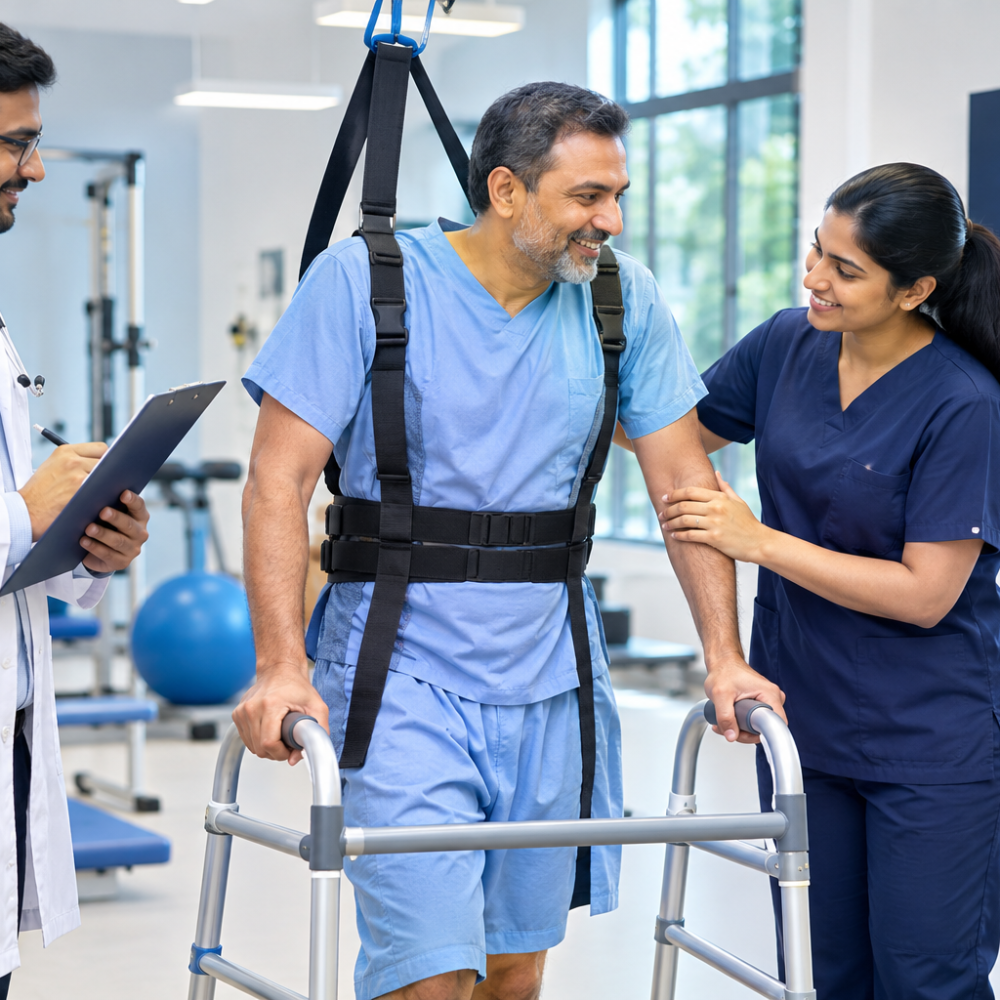
Muscle Strengthening and Mobility Training Recovering from Guillain-Barre Syndrome may require training to teach the patient how to perform basic daily functions and movements like standing, sitting and walking. This training may include mobility exercises and strengthening of various muscle groups. As flexibility of the joints is also reduced due to periods of immobility, therapies focusing on improving joints’ range of motion and flexibility may be required as well.
Encouraging slow improvement in physical endurance.
The best approach is to be individualized. Each patient will experience a different level of nerve damage and recovery.
Exercises for Balance, Coordination and Walking Nerve damage associated with GBS can impact muscles responsible for posture, balance and coordination. Improving nerve conduction does not always mean that one would be able to walk independently.
Patients can benefit from various activities designed to strengthen their balance and coordinate movement. Therapists can also supervise and progress standing activities, balance activities, as well as walking practice.
If a patient is unable to stand or walk independently, parallel bars may be used to provide stability during practice of walking.
All the above activities can be progressive and lead to improvement in confidence and stability. The goal is to refine and improve movements to make them safer and better controlled, and to a large extent help patients walk again.
If patients are provided support and practice the right activities under supervision, improvement and recovery is possible.
Neurological Rehabilitation for Guillain-Barre Syndrome
There are different aspects of rehabilitation focused on restoring functional capabilities for various disorders affecting the nervous system. For people affected with Guillain-Barre Syndrome, rehabilitation focuses on symptom management and functional restoration, and may take several weeks to months, depending on the level of functional disability.
An interdisciplinary team may include: physiotherapists, occupational therapists, speech-language pathologists, dietitians, psychologists, etc.
Rehabilitation should go beyond muscle strengthening to include assisting a person with restoring independence in self-care activities (bathing, dressing, eating, etc.) and returning to work.
There should be a multi-disciplinary focus during rehabilitation to cover a number of service areas as much as possible.
Occupational Therapy The goal of occupational therapy is for a person to be as independent as possible in activities of daily living. Due to weakness in hands and legs, people affected with Guillain-Barre Syndrome may have difficulty performing activities of daily living.
An occupational therapist may evaluate the patient’s ability to perform tasks of daily living and recommend specific exercises to improve the patient’s skills, utilize special techniques, and/or provide assistive equipment.
- Occupational therapy may work on improving:
- Dressing activities
- Eating
- Personal Hygiene
- Moving the arms and legs
- Household activities
Speech Therapy Speech therapy is required if there is weakness affecting facial muscles for speech and/or swallowing. An individual may have trouble swallowing food. In this case, a speech-language pathologist may evaluate the person’s swallowing ability and recommend appropriate exercises, techniques and changes in the diet.
The goal of these therapies is to improve a person’s ability to perform activities of daily living, to improve the person’s quality of life.
Pain Management and Fatigue Control Pain and fatigue are common concerns during recovery from Guillain-Barre Syndrome. Some people may experience nerve-related pain, muscle discomfort, weakness and tiredness even after the acute phase has resolved.
Pain management is determined by the type and severity of symptoms. In some cases, pain relieving medications may be prescribed by the doctor. Physiotherapists may also guide on positioning, appropriate exercise and activity.
F Fatigue management is equally important. Patients should not do activities beyond their physical capacity, especially when muscle strength is still recovering.
Some strategies that help in management of pain and fatigue during recovery are:
- maintaining a regular schedule to help promote restful sleep
- dividing larger tasks into smaller ones to prevent fatigue
- allowing adequate rest between therapy sessions
- intake of sufficient fluids and food
- gradually increasing physical activity
This approach helps patients in their participation in rehabilitation process without physical exhaustion.
Choosing Guillain-Barre Syndrome Treatment in Banjara Hills
It is important for patients and their families to make an informed decision when choosing an appropriate healthcare support. When selecting Guillain-Barre Syndrome treatment in Banjara Hills, one should be aware that treatment is comprised of several stages and may require a team of healthcare support staff.
The acute stage of the syndrome is a medical emergency and requires inpatient stay at a hospital which has neurological assessment, intensive care unit and facilities to provide supportive therapy and intensive care. Once the condition of the patient stabilizes, the patient may be transferred to a rehabilitation center.
At Banjara Hills, you will find neurologists, multispecialty hospitals and rehabilitation centers.
When making a decision about healthcare support, patients and their families should take the following into account:
Neurological Assessment: Evaluation and management of GBS requires the expertise of neurologists.
Hospital and Critical Care Support: Severe GBS can affect heart and lung function. Some individuals may require the support of emergency and critical care services.
Physiotherapy Services: Rehabilitation of GBS should include graduated and individually planned physical exercises.
Multidisciplinary Rehabilitation: The severity of GBS can require the support of multiple healthcare disciplines.
Progress Monitoring: Assessments of functional ability should be routinely performed so that healthcare support staff may modify treatment and rehabilitation as the patient improves.
A coordinated approach to the delivery of health services ensures that patients receive adequate support at the various stages of their recovery journey.
Recovery Timeline and Long-Term Care
There is a considerable amount of variability in how long it takes for individuals to fully recover from Guillain-Barre Syndrome. Some individuals begin to improve significantly within a few months. Others may take a year or more to improve to their previous level of functioning.
Variability in the severity of nerve damage, individual’s age and overall health, and presence of other complicating factors, and the individual’s response to medical treatment contribute to variability in the recovery timeline.
The condition generally progresses through the following three stages.
- Acute stage
During this stage, symptoms of nerve damage (e.g., muscle weakness) get worse and may progress to involve other nerve functions (e.g., sensation, swallowing and/or respiration). This is the stage that requires the most intensive treatment and may involve hospitalization and the administration of immunotherapy.
- Plateau stage
During this stage, the individual becomes relatively stable and symptoms do not get any worse. The individual may, however, have a lot of weakness and impairment of mobility.
- Recovery stage
In this stage, nerves that have been damaged and injured begin to heal and regain function. The individual requires rehabilitation to regain strength, balance, and/or mobility. Continued neurological assessments and care may be required for a long time to help the individual manage continuing fatigue and other symptoms.
The World Health Organization (WHO) reports that most individuals who have Guillain-Barre Syndrome recover fully, however some may suffer lasting effects and neurological conditions.
Recovery from Guillain-Barre Syndrome does not end with treatment in a hospital. Strengthening and movement therapies (physiotherapy, occupational therapy, neuro-rehabilitation, etc.) help people to regain their normal movement and function.
Conclusion
Those seeking treatment for Guillain-Barre Syndrome in Banjara Hills must know how to choose right hospital care during the acute phase and rehabilitation care after medical stabilisation.
ASA Healthcare in Banjara Hills offers rehabilitation focused healthcare services including neuro-rehabilitation and physiotherapy. Based on recommendations of a treating neurologist and individual’s clinical needs, patients and their family members can evaluate the available options for rehabilitation.
Medical supervision, consistent rehabilitation, and family support can help people recovering from Guillain-Barre Syndrome to become more mobile, facilitating an improvement in their normal activities of daily living, and increasing their independence.
FAQs
-
What is the best treatment for Guillain-Barre Syndrome?
The two main treatment options for this condition are IVIG and plasma exchange.
-
Where can I find Guillain-Barre Syndrome treatment in Banjara Hills?
Banjara Hills has several options for neurological care and rehabilitation.
-
Can physiotherapy help with Guillain-Barre Syndrome?
Yes. This type of therapy can help improve strength and mobility.
-
How long does it take to recover from Guillain-Barre Syndrome?
Full recovery can take several months, or longer.
-
Is it necessary to undergo neurological rehabilitation post Guillain-Barre Syndrome?
Yes, as it focuses on mobility and daily activities.