Emergency Contact: +91 910 002 2202

Best Spinal Cord Rehabilitation Center Hyderabad: All You Need to Know to Find the Right Care
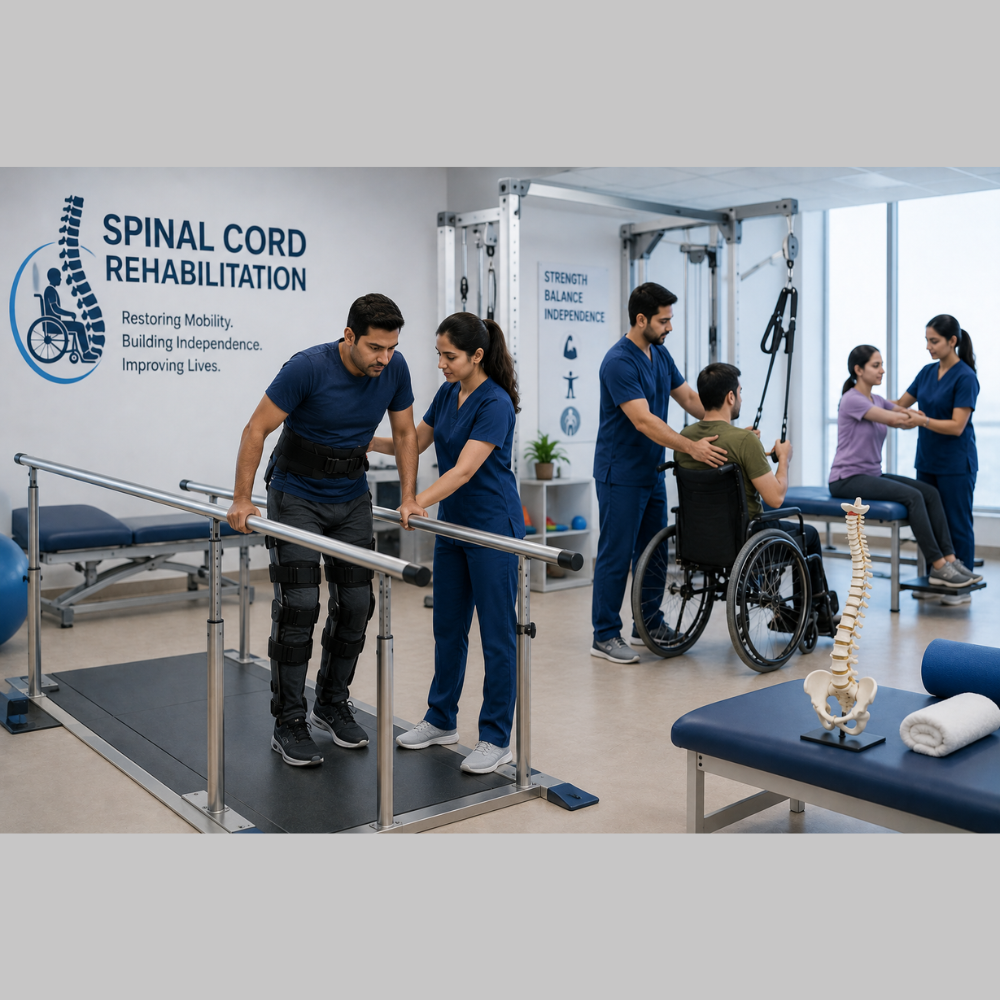
Best Spinal Cord Rehabilitation Center Hyderabad: All You Need to Know to Find the Right Care
03-09-2026Surviving a spinal injury is only the first step in a journey of a lifetime. Your day to day, including how you move, how you take care of yourself, who you take care of, how you work and how you communicate is all affected. A spinal injury also requires a lifetime of rehabilitation. There are many parts to this rehabilitation process, much more than just a few treatments or exercises. It is the gradual process of strengthening and rebuilding, learning to do everyday tasks, of avoiding further complications, and becoming more functional, Therefore the best spinal cord rehabilitation center Hyderabad is not necessarily the biggest clinic with the newest equipment. The answer is, can they offer the patient the rehabilitation they need, along with the appropriate level of care for their injury, health needs, ability level, and how far along they are in their rehabilitation?
The World Health Organization (WHO) describes a spinal injury as damage to the spinal cord either due to a traumatic or a non-traumatic injury and emphasizes the need for first aid and the importance of the initial care, rehabilitation, continuous health care and assistive devices, and specialized professional services. WHO states that rehabilitation is also the means to achieve optimization of functioning, as well as the systems that enable individuals to participate in the community, and enhance overall health and well-being. Rehabilitation is therefore much more comprehensive than traditional physiotherapy. Focusing on the rehabilitation environment for the families in Hyderabad can make the recovery process completely structured and fully practical.
Understanding Spinal Cord Rehabilitation
What is Spinal Cord Injury Rehabilitation?
Rehabilitation of spinal cord injury is a systematic process of healthcare that helps a person to regain the highest level of physical ability, independence, safety and involvement after the injury or condition that affects the spinal cord. The injury that occurred, its location, severity, complications, past treatment, age and health as well as the person’s goals contribute to the design of the spinal cord injury rehabilitation program. Because of the different impacts of injury on people, a rehabilitation program developed for one person may not be appropriate for another. The goals of a person with an injury of the cervical spinal cord may not be the same as the goals of a person with an injury of the lumbar spinal cord. Thus, a generic exercise program is of little value.
The spinal cord carries messages to and from the brain and thus controls movement, sensation and the activity of muscles of the body, control of the bladder and bowel, the ability to breathe, and the regulation of body temperature. According to the World Health Organization (WHO), a spinal cord injury may result to the loss of the ability to sense and move the parts of the body that are below the injury. The injury may also affect the ability to perform the activities of daily living like walking, dressing and bathing, and bladder and bowel management. For this reason, rehabilitation should address the entire person, and not just a single, isolated symptom.
Visualize rehabilitation as the reconstruction of a bridge part by part. For example, the first step may be keeping the individual in a safe position and avoiding complications. Progress may then be measured by improvements in balance for sitting and transfers, upper body strength and standing tolerance, and wheelchair skills, as well as steps toward walking, when appropriate. Down the line, goals may shift to self-care, community mobility, education or work, and prevention of regression. A rehabilitation center for spinal cord injury should focus on this gradation, with the view that recovery is not a list of checkboxes to be completed.
Spinal Cord Rehabilitation
The Importance of Immediate and Continuous Rehabilitation
In spinal cord rehabilitation, recovery is not complete after surgery, emergency care, or discharge from the hospital. Spinal cord injuries may continue to have aftereffects many months or even years after the incident. There are many secondary effects which may further complicate the individual’s quality of life, including weakness, stiffness, impaired balance, reduced endurance and fatigability, pressure injuries, inadequate respiration, impaired bladder and bowel control, chronic pain, and psychological trauma. The World Health Organization (WHO) states that timely rehabilitation and long-term care are essential in improving quality of life and minimizing the negative effects of secondary conditions in individuals who have suffered spinal cord injuries. The rehabilitation umbrella framework of the WHO also includes spinal cord injuries in neurological conditions that need rehabilitation. This further clarifies the position of the families of the individuals who suffered spinal cord injuries that rehabilitation should never be a supplement after medical care. It is a necessary component of active and complete recovery.
The need for early rehabilitation shouldn’t be confused with the need to push patients aggressively. Early rehabilitation involves starting rehabilitation measures under the doctor’s supervision at the proper time. There are some patients who can need early rehabilitation. These patients may need to be placed in position, supported for breathing , range of motion, education for pressure relief, and performed with caution transfer. Rehabilitation can gradually be advanced to increase strength, balance and mobility training and functional activities.
The best course of rehabilitation is to customize the approach for individual patients. A good rehabilitation center should evaluate the patient several times and not just perform repetitive routine activities. Rehabilitation should progress if the patient achieves something new and regress if the patient experiences a setback. A family should choose a rehabilitation center that can adapt the program according to the patient’s requirements.
The Characteristics of the Best Spinal Cord Rehabilitation Centers in Hyderabad
The presence of a multidisciplinary team is a sure sign of a quality spinal cord rehabilitation program. Each body system and element of daily life can be impacted by a spinal cord injury. A single practitioner may leave a large share of the patient's needs unaddressed. Depending on the patient's needs, the rehabilitation process may require a physical medicine and rehabilitation specialist, physical therapist, occupational therapist, rehabilitation nurse, psychologist, speech-language pathologist, feeding and swallowing therapist, nutrition therapist, orthotist, and prosthetist, and additional medical specialists as required.
In India, government rehabilitation services describe rehabilitation for spinal cord injury as an interdisciplinary practice involving physiatrists, physical and occupational therapists, rehabilitation nurses, psychologists, prosthetists and orthotists, and social workers. This model is beneficial because it helps to achieve the same end goal from many different angles.
A physiotherapist will focus on strength, movement, transfers, and balance, among other things. An occupational therapist, on the other hand, will focus on adaptive equipment, hand function, and performance of activities of daily living. A rehabilitation physician will coordinate the rest of the medical team, management of pain and spasticity, the use of medications, and the overall plan of rehabilitation. A psychologist will help the patient and the family deal with the "new normal" and will help alleviate symptoms of anxiety related to the loss of control and independence.
In your search for a spinal cord rehabilitation center in Hyderabad, the most important factor to consider is if the professionals listed above work together. Just having multiple specialists does not meet the criteria of a multidisciplinary team. The most important factors are regular assessment of the patient’s goals and teamwork among the individuals involved in the patient’s recovery.
Personalized Spinal Cord Injury Rehabilitation Programs
Spinal cord injuries are unique and so are rehabilitation goals. One patient may wish to improve independence in wheelchair use. Another seeks independence in standing and/or walking. Others may wish for improved independence in hand use, return to work, greater independence in activities of daily living, and less reliance on family.
Personalized rehabilitation programs begin with evaluation, not conjecture. The rehabilitation team needs to evaluate the patient’s history and present state of pain and muscle tone, strength and balance, endurance, in addition to their environment, support, and goals. With this information, goals can be set that are realistic and meaningful in the short and long term.
This type of goal setting also allows for meaningful measurement of progress. Instead of saying that a patient is “better,” a family can now easily measure progress in meaningful areas such as improved assistance for transfers, increased length of time of an unsupported seated position, learning safe and independent control of a wheelchair, performing a dressing task, improving control of upper extremity movements, and increased endurance during therapies.
A good program will also allow for the “U” shaped progression of rehabilitation. Some weeks may establish good progress, while others may focus on maintaining function, especially when dealing with concomitant medical issues. The goal should be measured and sustained progress, not extreme and/or rapid changes.
Key Services Offered by A Spinal Cord Rehabilitation Center
Physical Therapy and Mobility Training
In the context of spinal cord rehabilitation, physical therapy is a major service. Therapy can be used to address one or several components of muscle strength and flexibility and improve balance, coordination, endurance, posture, transfers, standing, gait, wheelchair mobility, and other functional movements.
Exercises should be tailored to the patient, not chosen based on a typical routine. Consider a patient with poor trunk control. This individual may need to do exercises to stabilize their core and improve their balance before they can be taught to perform higher level mobility tasks. Another patient may need to do exercises to strengthen their upper limbs in order to help them move their wheelchair and assist in transfers.
Mobility and mobile device training could include task related activities. Learning to safely move from a bed to a wheelchair (or a bedside commode to a wheelchair) may be as important a task as doing a mat exercise. Other activities, such as learning how to move on and off a bed, negotiate various floor surfaces, correctly position your body and perform pressure reliefs, as well as how to use mobility equipment, may be important as well.
Some rehabilitation centers use additional specialized equipment if they have the clinical rationale. Multiple centers in Hyderabad describe that their rehabilitation centers use advanced technologies along with a combination of therapies for rehabilitation of the spine and neurologic system. It is very important to use advanced rehabilitative technologies as aids to correct therapy practices. It is possible that the most expensive advanced technology is not the best treatment for the most patients.
Occupational Therapy and Activities of Daily Living
The goal of occupational therapy is to help individuals accomplish tasks of meaningful activities of daily living and to regain their ability to do so if they have become impaired. Spinal cord injuries can affect fundamental routine daily tasks like eating, grooming, bathing, getting dressed, talking on the phone, cooking, working at a desk, and moving about. All of these activities will need to be addressed if they have been affected by the spinal cord injury.
Occupational therapy can develop modified techniques as well as introduce assistive devices if necessary. The purpose is not to decrease the difficulty of an activity, but rather enable the person the opportunity to regain ownership of their life and decrease their reliance on others. This can even have a positive psychological impact for the individual. Decreased reliance on others can improve self esteem.
For instance, a therapy patient may learn how to engage in proper positioning of the wheelchair when it is time to transition, or learn how to use modified eating utensils. Patients also learn how to reorganize the items they use on a daily basis, keeping those items in the most convenient location for them.
Lastly, the type of rehabilitation needed to enable patients to return home is by far the most challenging and important. Real life can never be as controlled and predictable as the therapy world. A good rehabilitation program prepares patients for the true challenges of life after they leave therapy.
Assistive Technology and Equipment
A range of devices known as assistive products can contribute to spinal cord rehabilitation. Assistive products may include wheelchairs, cushions, transfer aids, orthoses, walking devices, bathroom equipment, communication aids, and other adaptive devices.
WHO emphasizes the role of assistive products in spinal cord rehabilitation because such products allow people to perform activities of daily living and enhance their level of independence. The necessity of clothing, bathroom, and other devices should be professionally assessed. Online popularity and advertising should not be the main criteria for the purchase of assistive products because this may lead to unharmonized and/or unnecessary acquisitions.
For instance, selection of the adequate wheelchair often involves seating and pressure management and requires assessment of the person's function and the chair's transportation and accommodation in the home.
A good rehabilitation centre should educate patients and their caregivers regarding the maintenance and usage of assistive products, to help develop a long term independence strategy, instead of viewing assistive products as isolated products.
Neurological and Medical Support During Recovery
Bladder, Bowel, Skin, and Respiratory Care
Spinal cord rehabilitation focuses on several aspects of a patient including movement, respiration, and physiological functions as well as regulation of blood pressure, muscle tone, and pain.
Appropriate medical care is required for the above functions in order to avoid complications. These functions can interfere with the overall spinal cord rehabilitation process.
WHO considers the management of spinal cord injury as the combination of the provision of care and prevention of secondary conditions. Spinal cord injury management demands medical practitioners with specific skills. Hence, when choosing a rehabilitation center, families should prioritize centers with comprehensive medical services as compared to physiotherapy amongst other services.
People with limited mobility experience pressure injuries due to a loss of sensation. For such individuals, regular skin checks and frequent changes in body position to provide relief from pressure are crucial.
Respiratory care is equally essential and particularly for patients with injuries at a higher level and weak respiratory muscles. Rehabilitation staff can provide supportive care for patients and facilitate active participation to a safer level, where appropriate and safe from a medical perspective.
Likewise, bowel and bladder management requires a disciplined routine to avoid loss of dignity. Although such issues are difficult to address, they play an important role in health, dignity, and independence. Such issues should not be ignored by comprehensive spinal cord rehabilitation programs.
How Spinal Cord Rehabilitation Supports Independence
The goal of spinal cord rehabilitation is to provide patients with safe, independent, and meaningful participation in their fulfilling daily activities. This encompasses a safe and highly skilled level of participation in activities of their daily living. WHO conceptualizes rehabilitation as a process to optimize functioning and facilitate participation in society through work and active engagement in various life roles.
Independence and recovery look different from individual to individual. Independence for some may be the ability to walk on their own. For someone else it could be the ability to use a wheelchair independently, manage their own hygiene, cook their own food, use the computer, and safely transfer from bed to chair. Recovery should not be measured by the loss of one skill, but by the ability to regain control over tasks that were previously lost.
Involvement from the family is also important. Training family members can help with safe transfer and positioning, pressure relief, and many other aspects of daily care. This also can help increase the family member’s confidence level and decrease the burden on the family.
A good rehabilitation program also focuses on the patient's life beyond therapy. Some patients may require daily home exercises, additional appointments, community-based therapy, assistive technology, and/or modifications to the workplace as well as periodic evaluations. Rehabilitation is a lifelong process.
A different perspective can change the way families perceive and evaluate therapy centers. Instead of asking "How many sessions do we get?”, families may want to determine “How is this therapy center going to help my family and me learn skills that would still be helpful once we leave the therapy center?” This is what rehabilitation is really about.
Selecting a Spinal Cord Rehabilitation Center in Hyderabad
Hyderabad has developed its healthcare ecosystem with hospitals and specialized neurological, spine, and rehabilitation services. The available information from rehabilitation providers in the city has options in areas such as Gachibowli and Somajiguda, while the major hospital systems provide physiotherapy and rehabilitation services for spinal cord and neurological conditions.
While the best option may differ for each person, families should still consider the clinical services, the rehabilitation team, the accessibility, programs with medical supervision, therapy scheduling, equipment, accommodation in case it requires inpatient care, the involvement of caregivers, emergency procedures, follow up support, and the overall treatment method.
One also should ask about the similar cases to their own that the specific center has had in the past. Just because a center has general physiotherapy, does not mean they are adequately prepared to deal with complex spinal cord injuries. Another center might have an entire spinal rehabilitation program that is multidisciplinary. Knowing such a difference helps a family come up with a better decision.
The location of the rehabilitation center is also important. Most rehabilitation programs require several sessions. Travel can really become a burden on both caregivers and patients. In patient rehabilitation, accessibility for family members becomes important. Hyderabad’s traffic and distance can make convenience an important factor for long term adherence.
Families must consider more than marketing advertisements when selecting a rehabilitation center. Advertisements often include unsubstantiated claims with phrases like “successful recoveries,” “advanced technology,” or even phrases such as “best center.” Families should be able to see the clinical services and staff on the website, as well as important information on staff qualifications, patient safety, post-rehabilitation planning, and follow-up.
Conclusion
The best spinal cord rehabilitation center in Hyderabad requires a combination of medical knowledge, practical understanding of safe rehabilitation, therapy, supportive technology, and a long-term commitment. Spinal injuries affect a variety of body systems including movement, sensory systems, personal care systems, mobility, and many more. Holistic rehabilitation must address these various systems, and not just one symptom or one exercise. The United Nations Health Organization (WHO) has supported spinal cord rehabilitation through multidisciplinary efforts to provide rehabilitation, assistive technology, and ongoing rehabilitation and healthcare to prevent complications.
When families evaluate spinal rehabilitation centers, the best approach is to go beyond the advertisements. Families should look at the rehabilitation staff, medical support, therapy approaches, and sets expectations for the patient that are realistic. A strong rehabilitation center should consider every patient’s recovery as a different path that is tailored to that patient.
The best rehabilitation center supports each patient step-by-step to build daily living skills, improve body function, control complications, develop confidence, and participate in daily life. The process can include many steps that are goal repetitions, but cumulative changes will result in an improved quality of life.
FAQs
What is spinal cord rehabilitation?
Spinal cord rehabilitation is a specialized program to help people recover their ability to move, build up their strength, gain their functional independence, and manage their daily activities after a spinal cord injury.How do I select the optimal spinal cord rehabilitation center in Hyderabad?
Go for a center that offers rehabilitation specialists, customized treatment programs, physiotherapy, occupational therapy, medical support, and the needed aftercare.Does spinal cord rehabilitation restore movement?
It depends on the location and the severity of the spinal injury, your health, and your body's response to treatment. Improved movement and greater functional independence is possible.What do spinal cord rehabilitation programs comprise?
Physical and occupational therapy, movement and strength training, use of assistive devices, and control of complications are some of the modalities that comprise this type of rehabilitation.How long does spinal cord rehabilitation last?
Length of time is patient-specific and is dependent upon the injury and the treatment goals as well as the individual's progress during therapy.