Emergency Contact: +91 910 002 2202

Best Pulmonary Rehabilitation Center Hyderabad: A Step-by-Step Guide on Finding the Right Care
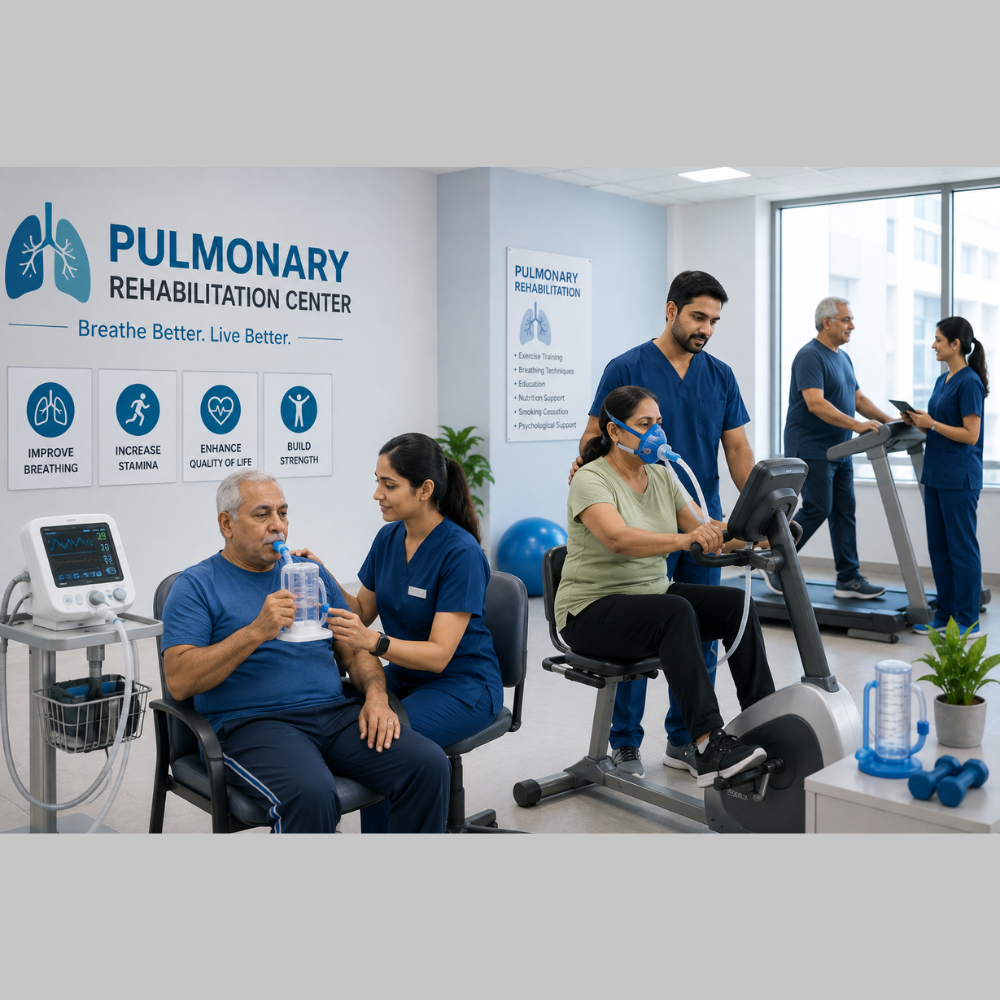
Best Pulmonary Rehabilitation Center Hyderabad: A Step-by-Step Guide on Finding the Right Care
03-09-2026How we interact with the air around us in everyday life often goes unnoticed. But for some people that interaction is complicated. Difficulty breathing can affect how you move, how you sleep, how you work, and how you go about doing even the easiest tasks at home. For many everyday activities, your breathing may become something that you have to think about. A key element in the respiratory care system that can help people manage everyday living is pulmonary rehabilitation. If you need the best pulmonary rehabilitation center in Hyderabad, you will need to consider more than just the location. You should look for institutions with programs where you can tailor the services according to your needs. Your respiratory rehabilitation program should assess where you are physically, monitor your progress, and help you increase your ability to take part in daily tasks. The WHO has formally endorsed rehabilitation as a critical part of health service delivery for patients with chronic conditions, including respiratory issues.
For chronic respiratory problems, pulmonary rehabilitation is especially useful. Respiratory issues such as COPD cause symptoms that don’t go away, like shortness of breath, cough, fatigue and limited ability to do physical activities. The WHO says that pulmonary rehabilitation is a part of COPD management in addition to medical care, physical activity, vaccinations, and assistance to stop smoking. A good rehabilitation program deals with more than the lungs. It includes factors such as strength and stamina, breathing patterns, confidence, nutrition, lifestyle, and the ability to perform daily life activities. In Hyderabad, where people have long work days, exposure to pollution caused by traffic, and different needs for health care, the best way to make the rehabilitation journey useful and long-lasting is to choose a personalized, customized program with professional supervision.
Knowledge about Pulmonary Rehabilitation
Pulmonary rehabilitation is a planned intervention that helps people with chronic respiratory conditions to enhance physical function and manage symptoms. It is more than just doing breathing exercises. It should not be used as rescue treatment for sudden breathing difficulty. This has to be more of a planned and gradual approach where assessment and prescription of exercises are done based on individual needs, combined with education and methods to manage symptoms and which is regularly monitored. According to the American Thoracic Society, assessment, exercise testing, endurance, resistance training, and individualized exercise prescription are the essential aspects of pulmonary rehabilitation.
What Pulmonary Rehabilitation Actually Involves
Pulmonary rehabilitation usually starts with a comprehensive assessment rather than placing a patient on an exercise machine. Healthcare professionals evaluate and address different components based on the patient's diagnosis and the program's clinical protocols. Per the description of the American Thoracic Society, important components of pulmonary rehabilitation consist of an initial assessment, exercise testing, quality-of-life assessment, dyspnea assessment, nutritional assessment, endurance and resistance training. These comprehensive assessments paint a holistic picture of how a respiratory disease affects the person's quality of life, rather than only providing a diagnosis.
The plan will include aerobic or endurance activities, strengthening exercises, breathing exercises, education on the condition, energy conservation, and how to stay safe exercising. Some patients may also need assistance to learn proper technique and management of oxygen and inhalers, and may need to make lifestyle changes. This should all be done based on the current healthcare professional’s orders for that patient. Pulmonary rehabilitation complements prescribed medical care and is not a substitute. As described by MedlinePlus, pulmonary rehabilitation is a program to allow patients suffering from chronic lung problems to improve their quality of life and function while complementary to medical treatment. This describes the real-life clinical-to-community transition.
Who Can Benefit From Pulmonary Rehabilitation
Patients experiencing breathlessness, reduced exercise capacity, fatigue, and difficulty to carry out common activities may potentially require rehabilitation, dependent on a health assessment. Those suffering from COPD may be some of the most commonly known of the pulmonary rehabilitation population. However, rehabilitation is not exclusively for those suffering from COPD. It may be an integral part of the rehabilitation process for those patients suffering from some forms of asthma, chronic respiratory disease due to infection, pulmonary hypertension, occupational lung disease, and other cardiopulmonary issues. According to the WHO, chronic respiratory diseases affect the lungs and airways, with asthma, COPD, and others being examples, and rehabilitation is incorporated into cardiopulmonary care.
The Importance of Pulmonary Rehabilitation for Respiratory Health
People with chronic respiratory diseases experience symptoms that impact exercising, moving around, socializing, and working. They can lose the motivation to do things they once enjoyed. There can be a number of reasons for this including not wanting to experience states that the society has taught each of us to avoid, such as being breathless. A reduced activity level can cause a loss of physical stamina and lead to reduced muscle strength. The World Health Organization (WHO) reports that chronic respiratory diseases have a significant negative impact on daily activities and a good management system can relieve symptoms and exacerbations of diseases and help patients stay active.
Pulmonary rehabilitation seeks to improve the symptoms and daily functioning of patients with chronic respiratory diseases. Unlike some of the other interventions that accompany this disease and are primarily drug based, pulmonary rehabilitation helps people manage both symptoms and the level of physical activity they can accomplish. This helps people discover their own limitations and build confidence to reach their potential. The ultimate goal of this therapy is to manage the symptoms of chronic lung diseases, loss of stamina, and muscular strength that are a lifelong condition, and not to cure the disease. WHO supports the use of pulmonary rehabilitation to manage chronic obstructive pulmonary disease (COPD). People who live in Hyderabad and are in need of the best pulmonary rehabilitation center should definitely consider this therapy as quality pulmonary rehabilitation must offer patients tangible improvements in their functioning and boost their confidence.
Conditions Typically Treated Through Pulmonary Rehabilitation
COPD is the most recognized condition associated with pulmonary rehabilitation. Those with COPD often suffer from exacerbations of breathlessness, diminished exercise capacity, and fatigue. Pulmonary rehabilitation is one of many treatment options endorsed by the World Health Organization (WHO) in its guidance on COPD. Chronic respiratory disease causes a host of issues that are functional in nature and rehabilitation incorporates exercises, therapy, and guided support. For persons whose breathlessness caused by diminished physical activity levels, the regimented nature of a rehabilitation program enables patients to safely and effectively improve their physical capacity.
Other chronic respiratory conditions may benefit from a similar program as asthma, pulmonary hypertension, certain post-infectious respiratory problems, and other cardiopulmonary issues may cause functional limitation. However, the program must never be the same for all respiratory diseases. A serious asthmatic patient, for example, has different limitations and treatment needs from a COPD patient. So does a patient who is recuperating from a serious infection. A good Pulmonary rehabilitation center in Hyderabad thus must customize treatment based on the patient’s needs and not just offer a ‘one size fits all’ solution.
COPD and Chronic Respiratory Issues
COPD can affect a person’s ability to do everyday tasks. The WHO identifies typical symptoms of COPD as shortness of breath, chronic cough with or without sputum, and fatigue. Kenney et al. describe how COPD can diminish a person’s activity because of the dyspnea. People can become less active to avoid extreme fatigue. This can lead to declining physical fitness. The functional side of COPD can be improved through pulmonary rehabilitation by physical training, education, and symptom management.
When designing a rehabilitation program to manage COPD, one should consider that everyone with COPD is different from the next. One individual may have good muscle strength but poor endurance, as the opposite is true for another. Some may require medical oversight for oxygen support, while some may not. Other factors that affect a person’s rehabilitation program include a patient’s last COPD exacerbation, the patient’s functional and medical status, and the patient’s medications and comorbidities. A coordinated approach integrating medical and rehabilitation care is the only way a pulmonary rehabilitation program is practical. If you are evaluating multiple pulmonary rehabilitation centers in Hyderabad, ask about the rehabilitation team’s relationship with the medical staff and their response to changes in the patient’s symptoms.
Post-Infection Asthma and Other Respiratory Lung Concerns
Symptoms of asthma vary case by case, but generally, there is an airway obstruction which leads to the individual suffering from breathing difficulties. Symptoms can be longstanding and include coughing, the sensation of chest tightness and wheezing. According to the WHO, symptoms are often triggered or worsened by tobacco smoke, air pollution, allergens, respiratory infections, changability in the weather, and physical activity. Asthma rehabilitation may complement primary treatment, but may include physical training to boost condition, breathing techniques, instructions and the planning of activities. Rehabilitation professionals should follow the treatment plan.
Many people can experience residual fatigue, exercise intolerance or difficulty returning to normal daily activities after recovering from a severe respiratory tract infection. Functional restoration of capacity may be the primary goal of rehabilitation and is only offered to people for whom it is appropriate and following a medical evaluation. Asthma is not the only respiratory lung disease that can severely limit function. WHO encourages cardiopulmonary rehabilitation in chronic respiratory diseases and considers this an area in which rehabilitation can enhance function. Good centers should have information explaining conditions treated, patients in need of specialized referral and the goals to be achieved through rehabilitation.
Personalized Assessment and Rehabilitation Planning
A personalized plan is a key element in a quality pulmonary rehabilitation program. Before starting any exercises, the team evaluating the patient must understand the respiratory diagnosis and related symptoms. The team must also consider the patient's medications and the limitations imposed by the functional status and the medical history. Assessments of exercise capacity can be done using either clinical or field tests. Other issues that can be assessed are the quality of life and the level of breathlessness. According to the American Thoracic Society, patient assessment, exercise testing, measurement of quality of life and breathlessness assessment are all critical components of a rehabilitation program.
Once patient assessment is done, goals must be set. An example of such a goal can be to improve breathing capacity by increasing the duration of a certain task that the patient was previously unable to perform without getting tired or by improving the patient's exercise tolerance. Once the patient achieves a certain goal, the goal can be modified based on the patient's new status. A comprehensive rehabilitation program must also outline what the patient can reasonably expect and the different factors that can potentially affect the patient's progress. Since respiratory conditions tend to be chronic and are unpredictable, the program must be able to accommodate such variations. If a center claims that it has the ability to provide the same outcome to all its patients, it is worthwhile considering this as a warning sign and asking further questions.
Exercise Prescribing, Supervision, and Response Monitoring
The role of exercise in pulmonary rehabilitation cannot be overplayed, except to stress that it must be prescribed. Patients with lung problems should not try to copy the moves they find in online exercise routines or even do intensive workouts if they are poorly informed regarding their condition. A prescribed exercise program will determine the most appropriate endurance or resistance exercises, and will adjust the intensity based on the patient's response and progress. Endurance and resistance training, and exercise that is prescribed and progressively adjusted, are all classified as essential by the American Thoracic Society (ATS).
Exercise can be made safer and more effective with proper monitoring. Depending on the patient's condition, the rehabilitation team may check symptoms, heart rate, blood oxygen level, perceived effort level, and/or other clinical parameters. Progress monitoring can show if the patient's functional capacity has increased and how tolerant the patient has become to longer periods of activity. We are not trying to create a contest, but the goal of this process for the patient is to see consistent, steady progress of not just tolerating exercise, but building the capacity to participate more in daily activities.
Important Parts of a Pulmonary Rehabilitation Program
Different centers will offer different components of a pulmonary rehabilitation program, but a complete program should integrate all three of the following core components: physical exercise, education, and self-management. Pulmonary rehabilitation includes much more than just breathing exercises. It may consist of endurance exercise and strength training and include breathing strategies, patient education, nutrition, and counseling to assist with creating lifestyle changes. Integrated care, rehabilitation, and self-management are three vital components of the World Health Organization’s efforts targeting chronic respiratory disease, and they are critical to the improvement of overall respiratory health.
Patients should also be concerned with programs that are integrated with everyday life. Programs should help patients return to their old activities; for example, allowing patients to return to work, being able to continue to go to the store, being able to handle household stairs, caring for their loved ones, and returning to social activities. A well designed program should help the patient understand how activities completed in the program help them safely perform activities outside of the program. Education may assist patients to recognize changes in their symptoms which will signal a need to seek medical care. The highest quality of a rehabilitation program should be supportive of the patient’s exercise for one hour. A rehabilitation program should also help create new behaviors for the patient to assist them with creating and sustaining healthy behavior changes.
Pulmonary Rehabilitation – Breathing Exercises and Respiratory Muscle Training
Breathing exercises can help patients suffering from pulmonary problems to some extent. Some breathing exercises can help improve the control of one’s breathing. Others can help breathing coordination with movement. Still others help to manage breathlessness. Different techniques serve different functions, and certain breathing exercises are not advised for certain breathing conditions. Some methods done incorrectly can have adverse effects, and patients may think that a certain breathing exercise is a good substitute for their medical remedies.
In some instances, respiratory muscle training may be an addition to other rehabilitation techniques. This is decided at the time of clinical evaluation by the rehabilitation team. The training is to improve breathing strategies and breathing techniques in order to enhance their effectiveness. It is understood that breathing techniques cannot “heal” damaged lungs. Patients should be careful of such claims by some centers that offer breathing techniques to eliminate chronic lung diseases and even guarantee total lung regeneration. The main focus of evidence-based pulmonary rehabilitation is to enhance the patient’s quality of life through improved function of daily activities and increased exercise capacity. WHO endorses the fact that COPD is incurable, but its symptoms and the quality of life of patients can be improved by treatment and rehabilitation.
Realistic Outlook on Benefits of Professional Pulmonary Rehabilitation
Understanding the benefits of pulmonary rehabilitation is crucial to managing expectations. As a therapy, rehabilitation is not a cure-all and the impact is dependent on the condition, severity, other comorbidities, and medication adherence. However, professionally guided pulmonary rehabilitation ensures the best possible outcomes for patients in the improvement of exercise capacity, physical functioning, and quality of life. Per MedlinePlus, pulmonary rehabilitation is a program dedicated to improving the function and quality of life for patients with chronic breathing problems, whereas for the World Health Organization, it is a component of the management of COPD.
The positive impact of rehabilitation on adherence to medical management is unparalleled. An improvement to breathing may come from medical advice such as “stay active.” However, this can be a daunting task for someone with breathlessness. A rehabilitation program specializes in assisting patients to achieve such activities in a stepwise fashion. Not only is a patient capable of safely performing activities, but a rehabilitation program teaches a patient to understand the signs of overexertion, pacing, and other breathing related symptoms. Understanding the “why’s” is a key to effective adherence, especially with chronic respiratory conditions which rely on prolonged self-management and minor increments.
Building Confidence, Mobility and Independence
There are many psychological barriers that impact an individual’s sense of control, motivation and capability to be active and participants in society. Many people are anxious to avoid becoming short of breath in social situations. As a result, they become less active, including avoiding using household stairs, outdoor walks, shopping trips, or social outings. It becomes a vicious cycle that ultimately causes more deconditioning and less physical ability to engage in activities of daily living. A supervised rehabilitation program helps individuals return to normal extracellular activities by closely monitoring patients’ functional status while they perform safe, gradual, sequenced activities.
The goal of gaining independence is especially satisfying to older adults. Independence for an older adult may mean the ability to walk around the house without experiencing severe fatigue. Independence, in a working adult, may mean the ability to recover from physical limitations of the job. For others independence may mean the ability to engage in household tasks and activities. It is important for the rehabilitation service to gain an understanding of the person’s desires and goals beyond the lung pathology. The primary goal of rehabilitation is to gain functional improvements that enable participants to engage in daily activities beyond exercising. This concept of rehabilitation is consistent with the WHO’s rehabilitation definition of improving functioning, allowing individuals to live more independently and actively within the community.
Improving Long-Term Respiratory Self-Management
The skills learned through pulmonary rehabilitation may be used outside of structured sessions. Individuals learn to pace activities, identify symptoms, self-regulate the amount/intensity of activity, and adhere to an individualized self-management plan and medical orders. Some individuals learn to discriminate between exertional breathlessness that is expected and the exacerbations that warrant a medical intervention. In addition, some of the uncertainties that patients may have may be diminished, and stock may be taken regarding the communication that is required with healthcare personnel.
There is a clear importance of self-management of a chronic respiratory disease since it does not disappear when a rehabilitation session ceases. The WHO reinforces the need for adherence to the correct line of medication in combination with self-management. There are myriad ways that pulmonary rehabilitation encourages the self-management of this condition. Some programs incorporate a daily routine to reinforce self-management, while others offer home- or remote-based programming. The WHO has documented a number of models that incorporate home- or tele-based programming while noting that there is a need for more evidence to determine how these models compare with the traditional programming that is offered in a clinic.
How to Choose Pulmonary Rehabilitation in Hyderabad
When looking for a pulmonary rehabilitation center in Hyderabad, first, consider what you are hoping to gain from a rehabilitation program. Do you have a weakened ability to exercise due to a respiratory illness? Are you looking for help after recovering from an illness? Are you looking for help managing COPD? Are you looking for a rehabilitation program that your doctor has suggested? Are there professionals that focus on respiratory rehabilitation? Is an assessment of your current state done prior to exercise? Is your progress assessed?
Location and convenience are important because rehabilitation requires consistency. A service that is the best in class but far away may be the toughest to deal with on a consistent basis. Hyderabad’s large size may contribute to long travel times for patients and their caregivers. Inquire about the schedule of your appointments, session length, the role of the caregiver, the alternative(s) to in-person sessions, and what happens if you are not able to attend your session. Most importantly, you should inquire about safety. An honest and reputable center should be able to explain to you their process of assessment, the methods they employ to monitor the patient's status, and the plan they have in case the unexpected happens. It is vital that you feel that you have the opportunity to completely understand each element of the program before you are asked to make a purchase.
Conclusion
Choosing the best pulmonary rehabilitation center in Hyderabad means finding a professionally supervised program tailored to your needs. Look for personalized exercise, symptom management, education, progress monitoring, and measurable goals. The right program can improve breathing, strength, mobility, independence, and overall quality of life.
FAQs
- What is pulmonary rehabilitation?
Pulmonary rehabilitation is a supervised program that improves breathing, fitness, symptom control, and quality of life. - How do I select the best pulmonary rehabilitation center in Hyderabad?
Choose a center with qualified respiratory specialists, personalized plans, proper equipment, and regular patient progress monitoring. - Who can benefit from pulmonary rehabilitation?
It can benefit people with COPD, asthma, pulmonary fibrosis, bronchiectasis, and other chronic respiratory conditions. - What therapies are involved in pulmonary rehabilitation?
Programs may include breathing techniques, supervised exercise training, fitness activities, education, and symptom management. - Can a pulmonary rehabilitation program help symptom control and with daily activities?
Yes, it can improve exercise capacity, breathing control, symptom management, and the ability to perform daily activities.