Emergency Contact: +91 910 002 2202

Best Neuro Rehabilitation Center in Hyderabad’: A Complete Guide to Selecting the Best Care
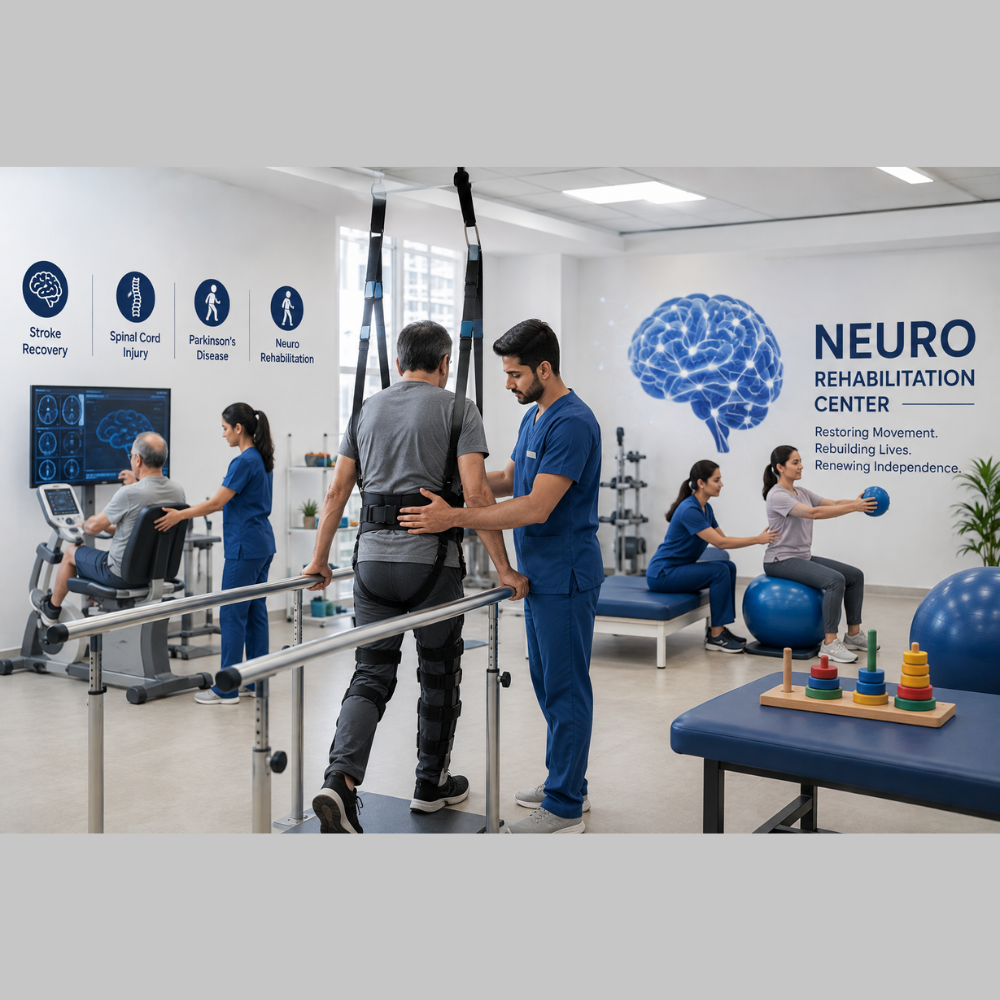
Best Neuro Rehabilitation Center in Hyderabad’: A Complete Guide to Selecting the Best Care
03-09-2026Rebuilding the road while driving on it’ is one way to describe the effect of the injury on the recovery process. Symptoms of stroke, brain or spinal cord injury, Parkinson’s, and other movement disorders can affect balance, movement, speech, swallowing, memory, and coordination and lead to a loss of independence. This kind of recovery takes more than just a few routine sessions of regular physiotherapy. A specialized neuro rehabilitation center in Hyderabad can help. Integrated neurological rehabilitation combines medical care, physiotherapy, occupational therapy, speech therapy, swallowing therapy, cognitive therapy, movement therapy, caregiver therapy, and rehabilitation planning. Current rehabilitation providers in Hyderabad say that instead of focusing on separate muscles and joints, neuro rehabilitation can be described as a multidisciplinary process aimed at increasing functional quality of life, independence, and mobility and improving communication, cognition, and rehabilitation.
When looking for the best neuro rehabilitation center in Hyderabad, patients and their families should be looking for much more than just the flashiest ad. One should consider if the rehabilitation center can identify the patient's level of neuro disability, set realistic neuro rehabilitation goals, offer the required intensity of neuro rehabilitation services, manage the patient's medical complications, and most importantly, offer flexible and adaptive neuro rehabilitation. Some Neuro rehabilitation centers in Hyderabad offer dedicated inpatient neuro rehabilitation, whereas others operate primarily as outpatient centers. The type of neuro rehabilitation center selected is highly dependent on the patient's disability, recommended level of care, and overall medical and functional stability. For instance, most of the rehabilitation services in Hyderabad promote the integration of neurological physiotherapy, speech therapy, occupational therapy, cognitive rehabilitation, gait training, and inpatient rehabilitation under medical supervision.
What is Neuro Rehabilitation?
Neuro rehabilitation is specialized rehabilitation focused on the nervous system due to disease, injury, surgery, or even a progressive neurological condition. Compared to general physiotherapy, neuro rehabilitation addresses the integration of all the systems and sub systems of the body (brain, spinal cord, nerves, muscles, sensory systems, and cognitive systems) to restore movement and function. In rehabilitation, a stroke patient may have complete strength of movement in an affected limb, but may still not be able to perform movement due to the disruption of the pathway in the brain. Rehabilitation focuses on restoring movements and functions through specific and repeated activities that are meaningful to the patient. Current definitions of neuro rehabilitation include the restoration of movement, speech, swallowing, cognitive functions, balance, coordination, and the restoration of independence.
The nervous system is similar to an intricate communications network. Damaging part of that network means the brain has to unlearn movement to relearn it. Therefore, majority of the job of restoring function is performed by the brain. Neuro-rehabilitation chips in where the nervous system is incomplete, and is similar to training that comprehensive communication system. Therapists use a systematic approach to employ various tasks, modify them based on the client's response and use the appropriate assistive or adaptive equipment, and develop the tasks to be more challenging. No two treatment systems will be similar, because neurological conditions are different in both presentation and severity. This is why a well-equipped neuro-rehabilitation center should perform an initial assessment before developing a plan.
How Neuro Rehabilitation Supports Recovery
The goal of neuro-rehabilitation is functional recovery, which may mean the client is able to lstand safely, walk with support, use the hand that was previously affected, communicate verbally, swallow safely, remember and retain important information, dress themselves, transfer from bed to a chair, go back to work and the community, and many other activities. For one client independence may mean the ability to walk across a room, for another it may mean learning how to safely transfer in and out of a wheelchair, or learning how to communicate basic needs. The goals set should be personalized and related to the client's unique condition. For instance, KIMS Hospitals states that neuro-rehabilitation is focused on the client and that its goal is to enhance their functional abilities and improve their condition while minimizing complications that may occur as a result of the condition.
Because recovery is a process rather than an event, patients display signs of improvement at varying rates, and the therapy plan must change accordingly. Multidisciplinary teams provide the opportunity to target multiple aspects of recovery in a single session. For example, movement and walking can be targeted through physiotherapy, occupation therapy can target personal activities of daily living, and speech therapy can target both communication and swallowing. Neurological and medical issues can be addressed by other medical professionals. This model is one of the crucial factors to consider when comparing neuro rehabilitation centers in Hyderabad.
Why the Right Neuro Rehabilitation Center is Crucial
The quality and structure of rehabilitation can influence how consistently a patient receives therapy and how effectively treatment can adapt to changing needs. A neurological patient may require supervision for transfers, feeding, and medication, as well as pressure-area care and management of the bladder and bowel, swallowing safety, and fall prevention, in addition to the required exercises. For patients with high medical complexity, providing an adequate level of safety can be a limiting factor for many rehabilitation centers. Several Hyderabad rehabilitation hospitals claim to have inpatient beds with 24/7 nursing, intensive therapy, and a multidisciplinary team, along with on-site critical care for the patients who need them most.
A facility's experience with a patient's unique condition is also a consideration for a family. Like stroke and spinal cord injuries, there are shared principles in rehabilitation, though the challenges resulting from functional limitations are not the same. For example, a patient with Parkinson’s may benefit from the use of long-term strategies and cues to assist with mobility and balance, while a patient with a traumatic brain injury may present with cognitive, behavioral, and communication challenges that may be further manifested by physical limitations. A quality center should explain what services they can provide, what their initial assessment will consist of, how they will measure progress, and how the family will be involved. Be cautious of organizations that guarantee recovery. Although each patient's neurologic recovery is unique, and based on many factors that are out of the control of the rehabilitation program, each patient’s recovery is going to vary.
Hospital-Based Care vs Standard Physiotherapy
There are many factors to consider for patients who require therapy, but can be mobile enough to attend therapy sessions on their own. Some patients need a lot of support and may require a stay at an inpatient rehabilitation hospital. A patient who had a severe stroke, for example, may require assistance for their mobility and transfers, as well as their swallowing, communication, personal care and medication management, and even require observation on a constant basis while they engage in their rehabilitation. An inpatient rehabilitation hospital offers a more holistic approach as all services involved in the patient's care are readily available in the same hospital. Several reputed clinics in Hyderabad, such as CNR, offer inpatient neuro rehabilitation along with physiotherapy, occupational therapy, speech therapy (including swallowing therapy), medical care, and full critical care facilities.
The decision for outpatient vs. inpatient care should not be determined by convenience or ads. The patient's neurologist, rehabilitation physician, and the rest of his medical team should be the decision makers for the appropriate level of care for the patient. Other factors that the family should consider are the patient's medical stability, mobility, cognitive ability, ability to swallow, the availability of a caregiver, the patient's fall risk, and the need for nursing care as well as the distance of the facility from the patient's home. Inpatient rehabilitation may also be an opportunity for the caregiver to learn safe ways to move the patient, the best positions for the patient, and routines to engage the patient at home. The most important factor for the patient should be the level of care that can address their most important needs.
Conditions Addressed by Neuro Rehabilitation
Neurological rehabilitation is concerned with the management and recovery of a range of conditions. Examples of such conditions include, but are not limited to, stroke, paralysis, traumatic brain injury, spinal cord injury, Parkinson’s disease, multiple sclerosis, cerebral palsy, balance disorders, disorders of speech, swallowing, and cognitive disorders. Post-surgical neurological recovery, age-related cognitive decline, and disorders of balance and gait frequently fall within the scope of a rehabilitation program focused on neuro rehabilitation in Hyderabad.
Specific therapeutic interventions hinge on the diagnosis, symptoms, and severity of the impairment. There is a considerable amount of variability in the rehabilitation needs of two people diagnosed with the same disorder. One patient who suffered a stroke may exhibit weakness in the arm while another patient may show severe walking difficulties and may also present with aphasia, dysphagia, memory problems, and spasms. The same variability may be seen when comparing the balance, gait, rigidity, tremors, and the ability to perform the activities of daily living of two people with similar symptoms of Parkinson’s disease. Personalized assessment should therefore be the foundation of any quality rehabilitation service.
Stroke and Paralysis Rehabilitation
Stroke is undoubtedly one of the most common causes of neurological rehabilitation. Following stroke, a patient may have weakness or paralysis on one side, loss of balance, difficulties with walking, speech, swallowing, impaired vision, and cognitive difficulties. The goal of the rehabilitation process is to regain as much safe and meaningful function as possible. Most stroke rehabilitation programs offered by centers in Hyderabad emphasize practice of movement for specific tasks, retraining of the walking pattern, management of spasticity, training of caregivers, and instruction of home exercise programs.
Paralysis rehabilitation aims to promote as much independence as possible and avoid the development of further complications. Rehabilitation may include positioning, strengthening (if needed), mobilization, transfers, balance training, and wheelchair, gait, and occupational therapy training. Carer education is also an important aspect. The objectives of rehabilitation depend on the type of paralysis, e.g. associated with stroke, spinal cord, brain, or neurological injury. Rather than determining whether a muscle is active, rehabilitation is concerned about the objectives that the patient has to achieve in their everyday life. For example, can they transfer themselves? Can they feed or dress themselves? Can they communicate? All of these questions enable rehabilitation to be transformed into an effective recovery program.
Brain and Spinal Cord Injury Rehabilitation
Traumatic brain injury may have wide-ranging implications and result in impairments to the person’s memory, concentration, attention, ability to self-regulate, organization, problem-solving, balance, coordination, and their emotional control and behavior, as well as impairing their communication and control of their movement. Because of these multiple impairments, a traumatic brain injury patient may need to undergo physical rehabilitation. Patients with spinal cord injuries usually require rehabilitation for control and strength of their limbs, transfers, positioning, skin integrity, modification of upper and lower limb function, and management of bladder and bowel function. These neuro rehabilitation centers bring together the professionals required to best manage all of these differing needs.
A quality recovery program should include the understanding that the recovery process is continuous outside of therapy sessions. As families provide most of the care for their loved ones and spend most of their days outside of formal sessions, families require guidance on positioning, safe mobility, exercises, communication, and daily routines with regard to the recovery process. It is even more imperative that these families are provided with this guidance for patients who are returning home after a prolonged stay in the hospital. The goal of the rehabilitation process is to build the patient's confidence while at the same time building the caregiver's competency, thus establishing a comfortable transition from a highly supportive stance to an independent one.
The Best Neuro Rehabilitation Center in Hyderabad
When seeking the best neuro rehabilitation center in Hyderabad, the selection should not be based on a single therapy service offered. The selection should be based on a comprehensive program that offers neurological physiotherapy, occupational therapy, speech and language therapy, swallowing rehabilitation, cognitive rehabilitation, gait and balance training, functional exercises, caregiver education, medical supervision, nutritional support, and appropriate nursing care. The existing rehabilitation facilities in Hyderabad describe a multidisciplinary approach of integrating some or all of the previously discussed services in the recovery plan of individual patients.
The integration of these services is justified, considering that the various neurological issues and impairments that are the focus of the rehabilitation process are closely interrelated. A patient who is unable to walk may have poor balance. Impaired balance may be caused by cognitive or visual apprehension that increases the patient's risk of falling. A patient with impaired speech due to stroke may also have difficulty swallowing. Treating each symptom separately creates gaps in the care process. However, coordinated rehabilitation enables the therapists to understand how one problem affects the other. In this context, a multidisciplinary team develops a plan to achieve functional rehabilitation goals as opposed to developing a series of unrelated therapy goals.
Neuro Physiotherapy and Mobility Training
Neuro rehabilitation is almost always comprised of neuro physiotherapy. In neurology, physiotherapists manage the implications of muscle weakness, abnormal movement, balance, gait, coordination, flexibility, endurance, transfers, posture and functional mobility. Instead of just exercise prescription, physiotherapists map movements from day to day life. This may include treatment of rolling in bed to sliding, sectors of sitting, standing, reaching, stepping, walking, turning, practice of stair usage, and safe use of mobility equipment.
In patients blinded by stroke or brain injury or patients with Parkinson’s disease or other neuro disorders, the ability to walk can be severely limited. Therefore, walking balance and training of gait can be vital components of rehabilitation. Falls can cause additional injury and are detrimental to the rebuilding of confidence. That’s why it's important to encourage safe practice. Some of the newer facilities in Hyderabad offer neurological rehabilitation services in combination with safe practice technologies and structured gait training.
What to Look for in the Best Neuro Rehabilitation Centre in Hyderabad
Sifting through the best neuro rehabilitation center in Hyderabad is mostly about selecting the right clinical team for the right patient. Looking for specialized physicians, therapists, speech and swallowing clinicians, nursing clinicians, and other services can help you determine the scientific legitimacy of the center. The neurological rehabilitation frameworks of most of the centers in Hyderabad are based on a multidisciplinary approach.
There are many factors to consider when examining the treatment environment. Are there inpatient rehabilitation services available? Is there nursing supervision on site all the time? Can medically complex patients receive care? Do treatment sites have rooms and therapy spaces that are accessible? Do treatment spaces have the equipment and emergency support needed to manage transfers? The answers to these questions provide important information about whole therapy environments, rather than therapy sessions, as a safe, supportive environment is very important for rehabilitation as it enhances safe and independent movement, and minimizes avoidable complications.
Multidisciplinary Team
A true multidisciplinary team works together, rather than as a bunch of independent individuals. With respect to the patient, the team should evaluate the current patient status, identify existing barriers, and determine the role of therapy in the goal development process. For instance, if a patient has dysphagia, recommendations in swallowing therapy would directly impact the nursing and dietary therapy routines. If the patient’s primary issue is balance, the therapists would coordinate the recommendations for movement with the therapy offered to the patient and the training of the caregiver.
Hyderabad centers offer multidisciplinary assessments and treatment plan reviews. These centers should be able to explain which multidisciplinary team member facilitates goal development reviews and how frequently the reviews are performed.
Tailored and Purposeful Therapy and Goal-directed Treatment
To develop an individualized plan, the assessment of a patient's needs in regard to physical, cognitive, communication, and swallowing involves a functional and medical assessment as well. The assessment informs the development of therapy goals. Instead of stating a goal to develop a patient's mobility, a goal can be set to ‘transfer from bed to chair with assistance of one’ or ‘walk with aid a specified distance.’ Progression on a goal can be monitored by family members, and the goal indicates the purpose of therapy for the family members.
Treatment goals also must be purposeful. Treatment should be more advanced should a goal be met quickly. Goals also must be tempered. A goal that involves an exercise that becomes overly fatiguing must be changed by therapy personnel. Therapy should not be about marking off a predetermined list of exercises, but should involve the achievement of progress for the patient to purposeful and measurable goals.
In modern rehabilitation with available technology, therapy can provide purposeful goals for patients. The appropriate use of technology in a clinic can improve therapy outcomes. Electrical stimulation, biofeedback, various types of assistive technology, and balance equipment, as well as robotic technology and gait-analysis systems, can be used. There are several Hyderabad facilities that provide specialty technology, such as gait analysis, EMG assessment, and specialized rehabilitation equipment.
Technology should also complement services rather than being the sole determining factor. A piece of advanced equipment becomes useful when coupled with a practitioner who understands the appropriate scenarios for its use, how to adjust the equipment, and how to make sense of the equipment's response in relation to the patient's functional goals. Technology should assist in providing hands-on rehabilitation, as opposed to replacing a therapist. Therefore, the families should focus their questions on the goal of the technology, the clinical relevance of the technology, and the indicators of progress.
Importance of Inpatient and 24/7 Rehabilitation Care
Neuro rehabilitation becomes especially important for patients requiring intensive and frequent therapy, medical interventions, and daily activities support. Inpatient rehabilitation provides intensive daily rehabilitation within the patient’s routine, as opposed to time-limited therapy. Some Hyderabad clinics offer 24/7 inpatient neuro rehabilitation, and other dedicated hospitals provide on-site medical and critical-care assistance.
This level of intense rehabilitation care also lessens the burden on families. Families are able to participate in the rehabilitation process with the therapeutic support and daily rehabilitation assistance provided to patients. The careful planning of the rehabilitation process is of benefit to the patient and family when the rehabilitation team is able to provide preparatory support for the family to adopt daily routines for exercises, new communication and feeding techniques, and safety assistance for mobility. Rehabilitation is a supportive process aimed at investments that allow patients to move from an assisted to an independent state.
How Long Does Neuro Rehabilitation Last?
There is no set answer to how long neuro rehabilitation lasts. The recovery timeline is individual to each person based on the severity of the neurological injury, age, the complexity of the co-existing medical conditions, the number of complications, and the degree of therapy participation, as well as their health prior to the injury and their natural recovery ability. Someone with a mild neurological impairment may need to attend rehabilitation for a short period of time, while a person who has sustained a severe stroke, brain injury, or spinal cord injury may need to attend rehabilitation for many months or years with a long period of intense treatment, followed by frequent outpatient or home-based therapies. Current rehabilitation service providers in Hyderabad are similar to others in that recovery is dependent upon the severity of the neurological injury rather than recovery occurring as a series of processes on a schedule.
It is helpful to think of a series of milestones rather than a specific number of days to recovery. Potential milestones may include the ability to; sit unaided, stand, transfer, walk, communicate, and/or perform an activity of daily living independently. The recovery goals can be reassessed at regular intervals and the plan can be amended accordingly. Families should avoid providers who give specific recovery time goals or outcomes. Good rehabilitation combines being optimistic and pessimistic. It treads the line of being realistic with the potential that every injury of the nervous system has the potential to behave in a way that no one can predict.
The Role Families Have in Neurological Recovery
Families play an imperative role in recovery. Others spend an average of a few hours with a patient, while families spend the majority of time with the patient. The therapists are only a small part of a patient's workday; however, therapists design the guidelines to be followed by families to aid the recovery process. Family members do not need to transform their homes into clinics or spend hours doing the patient's exercises. They only need to follow the therapist's advice, place the patient in the positions that promote recovery, engage in suggested communication, and monitor the patient for any concerns that may warrant creating a case report.
Emotional support is vital. Rehabilitating a patient's neurological system takes time and a lot of patience. Recovery may be slow with setbacks. Egos are built on automatic performance. Families need to appreciate and motivate the patient for each step of progress. A freshly achieved step that may seem small can include, but is not limited to, saying a word, taking a step, standing for a longer period of time, performing a task independently, and eating on one's own.
Questions to Ask Before Choosing a Neuro Rehabilitation Center
Each family planning to use a neuro rehabilitation clinic in Hyderabad should speak to a representative from the clinic to answer some of their basic questions. Those questions may concern the clinical team, evaluation methods, daily therapy time, availability of beds, medical coverage, support for emergencies, accommodations, training caregivers, follow-up, and the total cost. It is also important to ask if the clinic specifically addresses the condition of the patient.
A practical checklist may include:
- Do they offer neurological rehabilitation?
- Are assessments done to formulate a treatment plan?
- Which professionals operate there?
- Do they provide occupational therapy, speech therapy, and swallowing therapy as needed?
- Do they provide care for patients that require a higher degree of control?
- How do you determine progress?
- How often are rehabilitation goals assessed?
- Do they offer caregiver support?
- What happens after a patient is discharged?
- What costs are covered by rehabilitation?
These questions can help you tell the difference between a comprehensive rehabilitation program and a basic therapy program. The right center should have no issues answering your questions.
Conclusion
Choosing a neuro rehabilitation center in Hyderabad really comes down to which clinical center best supports an individual patient’s needs on their recovery journey. It is imperative that a strong center offers specialized services, qualified staff, and a plan that is tailored to the patient along with Intensive therapy, medical supervision, and the achievement of functional goals. There are many services in Hyderabad that offer neuro rehabilitation (stroke recovery, brain and spinal injury rehabilitation, neurophysiotherapy) along with occupational therapy, speech and swallowing therapy, intervention for neurocognitive deficits, training for safe and independent mobility, as well as supporting patients through an inpatient stay.
Families need to look past the label of “best” and look instead at what a facility can actually offer their family member. A good rehabilitation program offers a clear and defined path toward a future goal while being reasonable in goal setting. Recovery may not always be about returning to the way life was before the neurological event. Recovery could be learning to walk again or even being able to transfer safely and communicate needs, eat independently and participate in daily activities with confidence. With proper assessment and evaluation, therapy, supporting medical care, and family engagement, rehabilitation strives to help a patient achieve greater independence and improve the quality of life.
FAQs
- What is the most effective neuro rehabilitation center in Hyderabad?
Hyderabad's best center for neuro rehabilitation should comprise a team of specialists, neurological physiotherapy, occupational therapy, speech therapy, personalized treatment plans, and quality patient care. - What do Neuro rehabilitation centers in Hyderabad treat?
Some of the most common disorders treated by neuro rehabilitation centers are stroke, paralysis, brain or spinal cord injuries, Parkinson's, and a host of other neurological problems and balance disorders. - How much time does neuro rehabilitation take?
The time frame of neuro rehabilitation varies based on the patient, the patient’s condition, the goals for recovery, the patient’s response to treatment, and the patient’s individual needs. - What do neuro rehabilitation services include?
Neuro rehabilitation includes physiotherapy, occupational therapy, speech therapy and swallowing therapy, gait and balance therapy, cognitive therapy, and training for the caregiver. - How do I identify the best neuro rehabilitation center in Hyderabad?
The best center for neuro rehabilitation is the one which has a specialized rehabilitation team, the most effective treatment, a personalized approach, quality services, and a patient focused environment.